



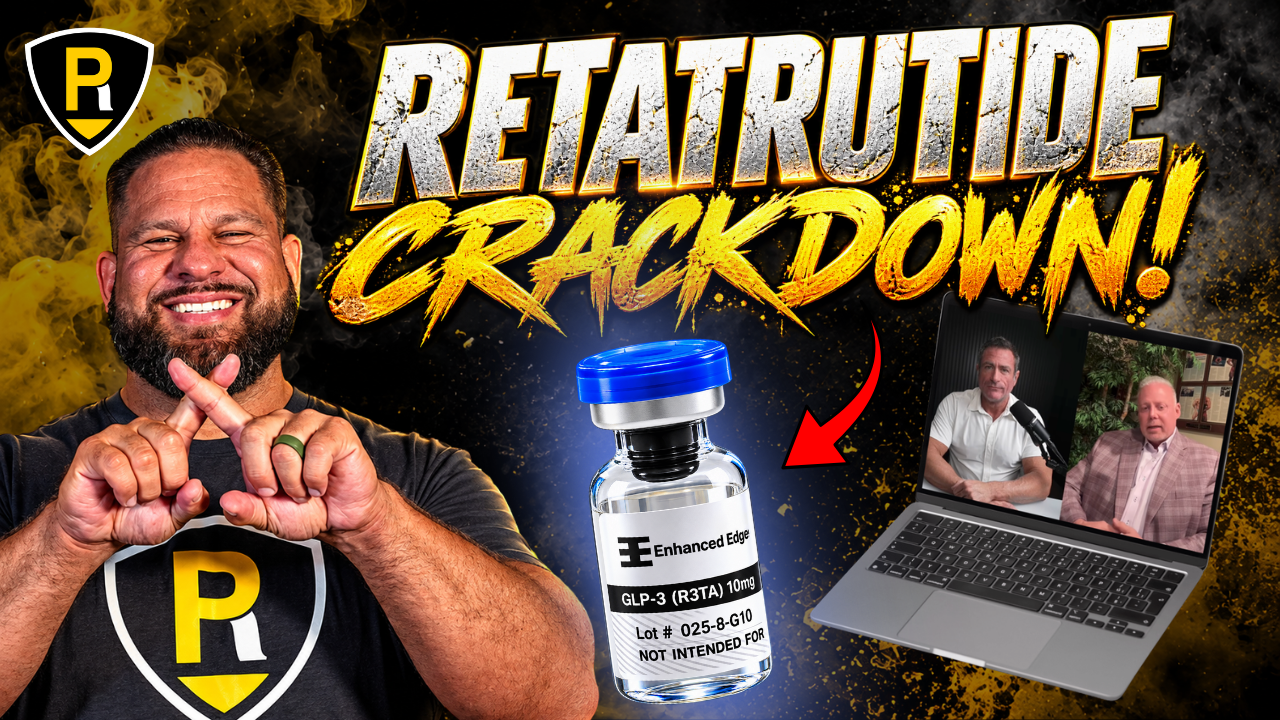
28 Oct The Retatrutide Crackdown: Eli Lilly, Research Peptides, and the Legal Risks Nobody Wants to Discuss
Watch the full video on Rumble!
Article Rundown
- Eli Lilly’s Retatrutide Crackdown: Why the pharmaceutical company is pursuing legal action against unauthorized peptide sellers to protect its intellectual property.
- The Legal Risks of Research Peptides: Attorney Rick Collins explains why “research use only” labels do not necessarily protect companies from FDA enforcement.
- Peptide Safety and Quality Concerns: The risks of contamination, inaccurate dosing, and questionable manufacturing standards in the unregulated peptide market.
- Medical Freedom vs. Government Regulation: The growing debate surrounding experimental peptides, physician oversight, patient safety, and the future of peptide accessibility.
Eli Lilly, Research Peptides, and the Legal Risks Nobody Wants to Discuss
The peptide industry is entering a period where the consequences of selling, prescribing, and distributing unapproved compounds could become much more serious. With Eli Lilly pursuing legal action against companies selling retatrutide, the question is no longer simply whether these compounds work. It is whether the people manufacturing, distributing, and recommending them understand the legal risks involved.
I recently watched an excellent interview featuring attorney Rick Collins on Men’s Health Span. Rick has extensive experience representing clients involved in cases concerning performance-enhancing drugs, controlled substances, and pharmaceutical regulations. His perspective offers a look at what actually happens when these issues leave social media and enter a courtroom.
There is a significant difference between what someone believes is legal and what they can successfully defend in court.
Rick Collins and the Reality of Federal Investigations
I’ve followed Rick Collins and his work for more than two decades. We originally met through the strength community, including a memorable gathering at Bev Francis Powerhouse Gym in New York. His knowledge of the legal system has stayed with me ever since.
In 2008, I had an unexpected encounter with federal investigators who came to my home looking into something they believed I was involved in. Thankfully, I understood the importance of protecting my rights and obtaining legal representation.
That experience reinforced something Rick has emphasized for years. People often believe they can explain their way out of an investigation, when their statements can actually create additional problems. Understanding your rights and consulting a qualified attorney are critical whenever legal questions arise.
Why Eli Lilly Is Going After Retatrutide Sellers
Retatrutide is an investigational medication being developed by Eli Lilly. It acts on three hormone receptors involved in metabolic regulation: GLP-1, GIP, and glucagon. The compound has generated considerable interest because of its potential applications in obesity and metabolic disease.
However, retatrutide remains in Phase 3 clinical trials and has not received FDA approval. Developing a medication requires substantial financial investment, extensive clinical testing, and years of research. Eli Lilly has invested heavily in retatrutide and is understandably interested in protecting its intellectual property.
The company has filed lawsuits against businesses accused of selling unauthorized retatrutide products, including peptide suppliers and medical businesses. It has also reported suspected sellers to regulatory authorities.
I’m not here to defend every action taken by the pharmaceutical industry. However, regardless of personal opinions about drug pricing or corporate profits, companies have legal mechanisms to protect their investments. Ignoring those protections because a compound has become popular does not eliminate the legal consequences.
The Problem With “Research Use Only” Labels
One of the most interesting parts of Rick’s interview concerns companies selling peptides labeled “research use only.” Some businesses assume that placing this language on a product protects them from liability. Unfortunately, the situation is considerably more complicated.
Regulators can examine how products are advertised, who purchases them, what sellers communicate to customers, and whether the products are actually intended for human consumption. A company cannot necessarily avoid pharmaceutical regulations simply by declaring that something is not intended for human use while simultaneously marketing it in ways that suggest otherwise.
This distinction matters because selling an unapproved drug can expose businesses to significant regulatory and legal consequences. A label is not a substitute for compliance with the law.
Product Quality, Contamination, and Consumer Safety
There is another side to this discussion that deserves attention. People are understandably frustrated with pharmaceutical pricing and limited access to emerging treatments. Some turn to independent peptide suppliers because they believe they are taking greater control of their health.
However, purchasing an unapproved injectable compound introduces legitimate concerns involving purity, contamination, dosing accuracy, and manufacturing standards. Some research suppliers provide third-party certificates of analysis. Those documents may offer useful information about a tested sample, but they do not automatically establish that every product sold is safe, sterile, accurately dosed, or appropriate for human use.
I also believe consumers deserve complete context when contamination or quality problems are reported. Understanding how products were sampled and tested matters. Nevertheless, the absence of documented contamination does not establish safety. With injectable compounds, the consequences of poor manufacturing practices can be substantial.
When Medical Professionals Enter the Gray Area
Rick’s discussion also raises an important question about physicians and medical providers attempting to reduce harm. Some practitioners believe that if patients are going to obtain experimental peptides regardless, providing medical supervision and sourcing products through pharmacies may be safer than leaving patients entirely on their own.
I understand that argument. However, good intentions do not automatically make prescribing or distributing an unapproved compound lawful. The FDA’s Pharmacy Compounding Advisory Committee has examined substances including BPC-157 and TB-500. These discussions highlight concerns about limited human safety data, insufficient clinical research, and uncertainties surrounding pharmaceutical quality.
BPC-157, for example, is frequently promoted for tissue recovery, but its proposed therapeutic benefits have not been established through adequate human clinical trials. Medical professionals attempting to navigate this environment must understand that professional licensing and patient-centered intentions do not exempt them from applicable regulations.
Personal Freedom Versus Government Regulation
This brings us to a broader philosophical disagreement. Adults are permitted to make many decisions that negatively affect their health. Excessive alcohol consumption, poor dietary habits, and other lifestyle choices can carry considerable consequences.
So why are certain experimental compounds regulated so aggressively? I understand the argument for personal freedom. I also understand why regulators distinguish between ordinary consumer choices and distributing unapproved injectable medications with uncertain safety profiles.
The challenge is determining where appropriate consumer protection ends and unnecessary restrictions begin. That discussion becomes even more complicated when patients seek guidance from providers who may face legal limitations on what they can prescribe.
Where Does the Peptide Industry Go From Here?
The retatrutide situation should serve as a warning to anyone involved in the peptide industry. Whether you’re a supplier, physician, researcher, or consumer, understanding the difference between scientific interest, medical approval, and legal authorization is essential.
Rick Collins brings valuable perspective because he has seen how these cases develop and how quickly assumptions about legality can fall apart under scrutiny. I believe peptides and emerging medical treatments deserve continued research and responsible discussion. However, promising applications do not eliminate the need for appropriate testing, quality control, or legal compliance.
The industry is changing, and the people operating within it need to recognize that reality before the consequences become much more serious.
Contact Info!
Brian Carroll Info:
Website: PowerRackStrength.com
Email: Brian@PowerRackStrength.com
Instagram: BrianCarroll1306
Rick Collins Info:
Website: RickCollins.com
Instagram: RickCollinsESQ
Full Podcast Covered in the video: https://www.youtube.com/watch?v=UhcKsWSMNB8
Buy Gift of Injury!
Buy Back Mechanic!

Buy Ultimate Back!

Buy Back Mechanic!
PRS Bands and Straps!


Sorry, the comment form is closed at this time.