



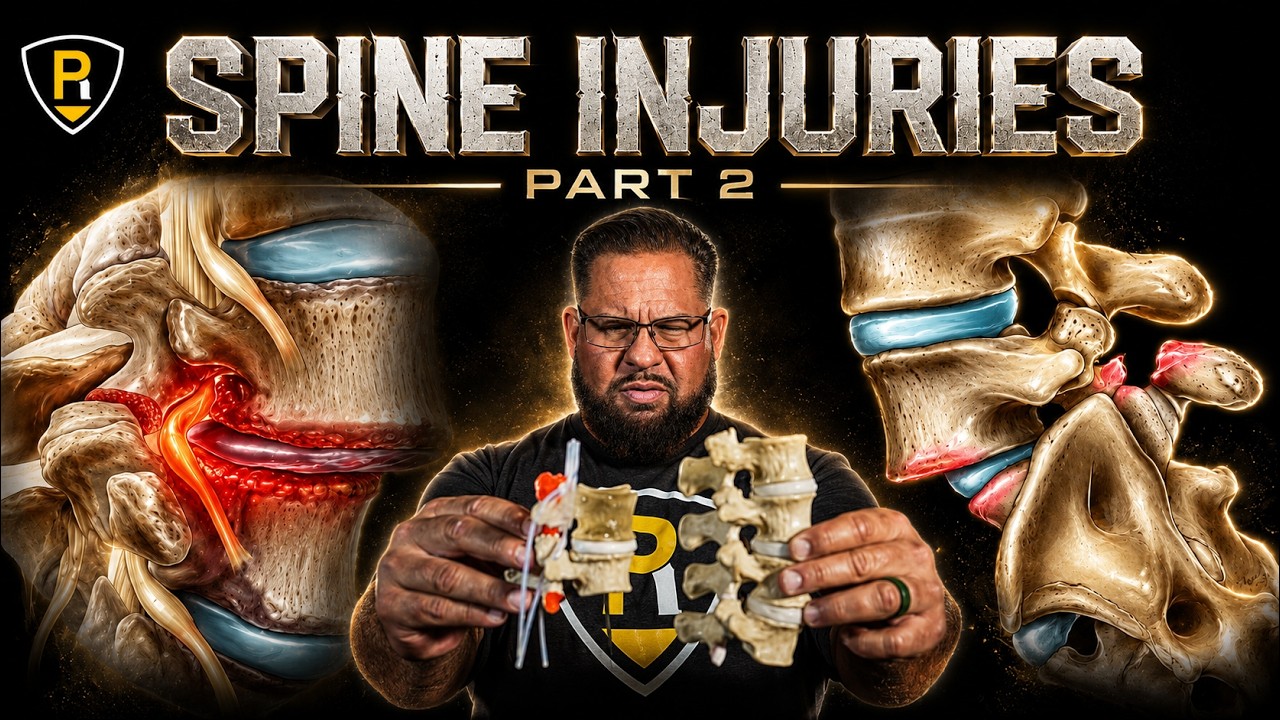
05 Jun Spine Injuries Are Specific, Not Random
Article Rundown
- Spine injuries need specific assessment, not generic fixes.
- Pain triggers matter more than MRI labels alone.
- Disc, facet, and instability issues behave differently.
- Find the cause, remove the irritant, then rebuild.
Spine Injuries Are Specific, Not Random
When people hear terms like disc bulge, spondylolisthesis, facet overload, annular tear, or spinal instability, they usually want one simple answer: “What exercise fixes it?” That is the wrong place to start.
I have seen too many people chase the label on the MRI instead of asking the more important question: what is actually causing the pain? Two people can have almost identical scans, and one may be in severe pain while the other has no symptoms at all. That is why I do not treat the image alone. I look at the person, the movement, the history, and the specific pain triggers. That is where the real answer starts.
When the Spine Starts to Shift
One injury pattern I see is when a spinal segment begins to lose its normal stacking and control. The vertebrae are guided by the facet joints, and over time, when disc height is lost and the degenerative cascade begins, the mechanics of that segment can change.
As the disc loses height, the joints in the back of the spine begin to take more load. The facets compress more. The posterior elements of the spine can become stressed. With enough repeated flexion, extension, compression, and shear over time, the pars or surrounding structures can become irritated or even fracture. This is where you may hear terms like spondylolysis or spondylolisthesis.
In simple terms, one segment can begin to slip forward or backward. Neither direction is ideal. When the spine loses that stable stack, the person may feel unstable, achy, irritated with extension, or unable to stand comfortably for long periods.
Bone Stress, Deep Aches, and “Grumpy” Backs
Some of these cases are more subtle. A person may not always describe sharp pain. Sometimes they describe a deep, boring ache in the middle of the back. Sometimes it feels like the spine is just “grumpy.”
That matters because bone stress and chronic irritation can show up differently than a classic disc injury. In some cases, you may see changes on imaging that suggest stress reaction, inflammation, or bone bruising. But again, the scan alone does not tell the whole story. The person’s symptoms, movement patterns, and triggers still matter most.
This is also why having the right eyes on the image can matter. A savvy radiologist or clinician may catch things that a generic read misses, especially when the issue is not a big, obvious herniation but a pattern of chronic stress and instability.
Facet Overload and Extension-Based Pain
As disc height decreases, load shifts toward the back of the spine. That means the facet joints can start taking more stress than they were designed to handle. Over time, those joints can become irritated, thickened, arthritic, and in some cases, they can contribute to narrowing around the nerve pathways.
This is one reason some people hurt more when they stand, walk, or extend their spine. They may actually feel better when they sit down because sitting temporarily opens things up and reduces that extension-based loading.
That is different from many disc-driven problems, where sitting is often one of the worst positions. Disc pain is commonly more flexion-sensitive, especially when flexion is combined with load, compression, or twisting. This is exactly why you cannot give every back-pained person the same plan.
Disc Bulges, Annular Tears, and Radiating Symptoms
Disc-related pain usually has its own pattern. Repeated flexion under load, twisting, compression, and poor exposure management can contribute to annular tears. The annulus is the outer ring system of the disc, made of layers of collagen. When those layers start to tear, the nucleus inside the disc can work its way into places it should not be.
That can create local back pain, chemical irritation, nerve irritation, or symptoms that travel down the leg depending on the level involved. Sometimes a person has back pain and leg symptoms. Sometimes the back barely hurts, but the pain, numbness, or strange sensation shows up in the foot, big toe, calf, or another area.
This is why chasing symptoms alone can be misleading. The pain location matters, but the mechanism matters more.
The Assessment Comes First
My approach always starts with the assessment. I am not just looking at the MRI report. I want to know what movements provoke the pain. Is it flexion? Extension? Compression? Shear? Instability? Sitting? Standing? Walking? Bending? Twisting? Training? That is where the detective work begins.
Once you know the specific pain triggers, you can build a strategy. Without that, you are guessing. And guessing is why people stay stuck for months, years, or even decades.
The spine is not fragile, but it is specific. Once the disc changes, once the endplate becomes irritated, once the mechanics of the segment change, you have to respect what the tissue can and cannot tolerate. Dr. McGill has said many times that the endplate matters, and the more we understand about disc nutrition, bone stress, and spine mechanics, the more that becomes obvious.
Stop Treating Every Back Injury the Same
The biggest mistake is treating all back pain the same way. A flexion-sensitive disc issue, an extension-sensitive facet problem, a spondylolytic stress reaction, and an unstable segment do not all need the same approach.
Some people need to stop flexing under load. Some need to stop cranking into extension. Some need to reduce shear. Some need to rebuild stiffness and stability. Some need to remove the exact daily exposure that keeps picking the scab.
That is why the label is only part of the story. The real progress starts when you identify the specific mechanism driving the pain and then remove the irritant long enough to let the body calm down and heal.
The Big Takeaway
Your spine is not weak. It is not doomed. But it is specific. If you know what triggers your pain, you can stop guessing. You can stop chasing random stretches, random exercises, and random programs. You can start building a plan that fits your actual injury, your actual movement patterns, and your actual life. That is where healing starts.
In the next video, I am going to walk through how these injuries actually heal step by step so you can understand the process and start making real progress again. For anyone who wants a deeper guide, Back Mechanic and the Back Mechanic Video Enhanced material are great resources to help you understand these principles and apply them the right way.
Buy Gift of Injury!
Buy Back Mechanic!
Buy Ultimate Back!
Buy 10/20/Life!


Sorry, the comment form is closed at this time.