



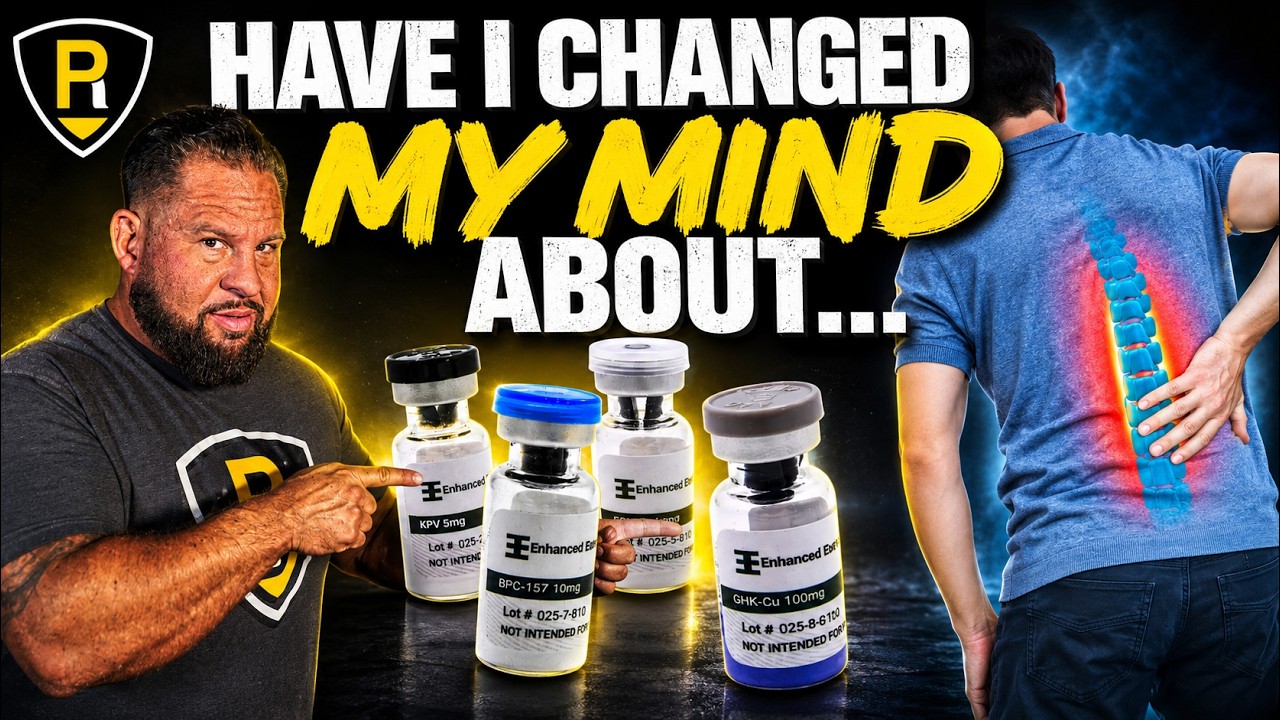
01 Jul Have I Changed My Mind About Peptides and Back Pain?
Article Rundown
- Peptides cannot overcome the cause of your pain.
- Fix the mechanical problem before adding compounds.
- Weight loss can help or hurt depending on muscle loss.
- Peptides may support recovery, but they are not the solution.
Have I Changed My Mind?
Over the last few years, I have made several videos about peptides, stem cells, PRP, growth hormone, and other compounds that may support healing. Since then, I have gained several more years of clinical experience and worked with many more complex back-pain cases.
So, have I changed my mind about peptides?
Yes and no.
Peptides Cannot Outrun the Cause of Pain
My main position has not changed. Peptides are unlikely to fix your back if you continue doing the exact things that are creating and aggravating your pain.
You can take BPC-157, TB-500, or whatever compound is currently popular, but if you continue pile-driving your body into the ground, repeatedly provoking the injured area, and ignoring the mechanical cause of your symptoms, you are probably wasting your money. It is like throwing water on a fire while someone keeps pouring gasoline on it.
Before you start thinking about peptides, you need to identify and remove the pain generator. That could be excessive compression, repeated twisting, poor movement patterns, bad training decisions, instability, or simply doing far more than your body can currently tolerate. Remove the cause first.
Where Peptides May Be Helpful
Once the mechanical driver has been addressed, peptides may have a place. That does not mean they magically heal every injured disc or eliminate every case of nerve pain. It means they may help create a better environment for recovery when the person is already doing the important things correctly.
That includes adjusting training, improving movement quality, managing bodyweight, maintaining muscle, eating properly, sleeping, and gradually building capacity.
In some cases, I do suggest that clients investigate peptides with a qualified medical provider. The key is matching the compound to the person, their health, and the actual mechanism behind their pain. This is not a one-size-fits-all situation.
Bodyweight Changes Can Help or Hurt
Weight loss is another area where context matters. For some people, especially those carrying a significant amount of excess weight, losing body fat can reduce the compressive forces placed through the spine with every step. This may be helpful for older adults dealing with stenosis, arthritis, disc-height loss, or symptoms caused by prolonged standing and walking. But rapid weight loss can also create problems.
Some people lose muscle along with fat. If they already have an untrained and unstable spine, that loss of muscular support can leave them feeling catches, pinches, and new pain that they did not experience before. Losing weight is not automatically good or bad for the back. The outcome depends on how the weight is lost, how much muscle is retained, and whether the person is training their body to create sufficient spinal stiffness.
Different Problems Require Different Solutions
Back pain is not one diagnosis. One person may be dealing with compression. Another may be dealing with instability. Someone else may have nerve irritation, poor movement tolerance, or repeated inflammation caused by training.
That is why asking, “Do peptides work for back pain?” is too broad. Certain compounds may show promise for nerve recovery, tissue healing, mitochondrial health, body composition, or recovery. But whether any of that matters depends on the individual case. The mechanism of pain has to guide the plan.
My Position Has Become More Specific
I have not suddenly decided that peptides are the answer to back pain. What has changed is how I present the subject. Peptides may be useful, but they are not a substitute for removing the cause of pain. They should not be used as permission to continue training poorly, moving badly, or repeatedly irritating an injury.
If you have corrected the mechanical problem, cleaned up your training, improved your nutrition, and built a proper recovery plan, then peptides may be worth discussing with a knowledgeable medical professional. But taking BPC-157 and TB-500 while continuing to destroy your back is not a recovery strategy.
So, have I changed my mind?
Yes, no, and maybe.
Peptides can have a role. They just cannot do the work that you refuse to do yourself.

Sorry, the comment form is closed at this time.