



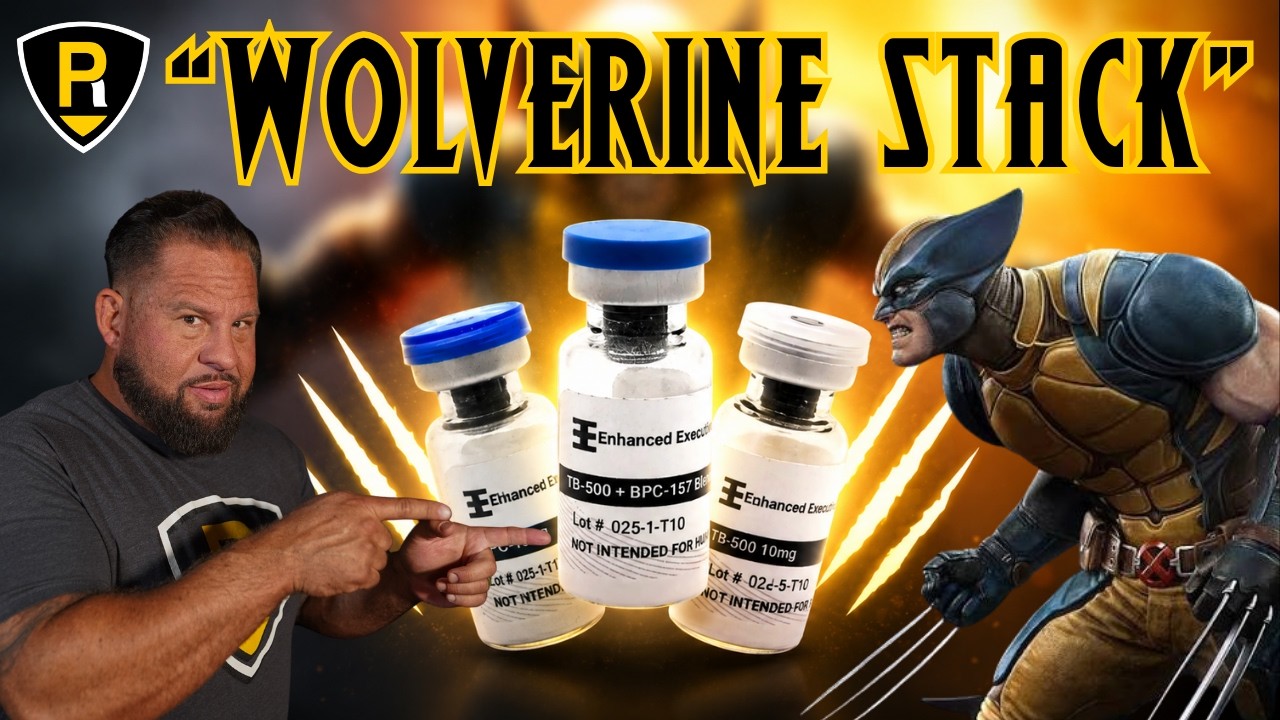
08 Jul The Wolverine Stack: What It Is, What It Does, and What People Get Wrong
Article Rundown
- The Wolverine Stack usually refers to combining BPC-157 and TB-500 for recovery and soft tissue support.
- It may help with strains, nagging joints, tendon issues, and inflammation, but it will not magically fix a full tear or avulsion.
- Peptides can support healing, but they will not correct bad mechanics, poor programming, or repeated injury triggers.
- Do your own research, know your sport’s testing rules, check your sources, and don’t blindly copy someone else’s protocol.
What It Is, What It Does, and What People Get Wrong
The “Wolverine Stack” is one of those peptide protocols that has taken on a life of its own. You hear the name, and it sounds like something out of a comic book. Heal faster. Recover harder. Bounce back from injuries as if nothing happened. What actually is it?
At its most basic level, the Wolverine Stack is the combination of BPC-157 and TB-500. These are two of the most talked-about peptides in the recovery and injury world. They’ve been around for a while, and long before they became popular online, people in the trenches were already experimenting with them. The question is not just, “Does it work?” The better question is, “Does it make sense for your situation?”
Why Is It Called the Wolverine Stack?
The name really blew up years ago when Ben Greenfield wrote about using BPC-157 and TB-500 together. That article made the rounds, and the name stuck. The idea was simple: combine two compounds that may support healing and recovery, and you get something that helps the body repair itself faster — like Wolverine.
Now, is that a perfect name? Not really. This isn’t magic. You are not going to inject something and suddenly regenerate tissue overnight. But the name caught on because the concept is easy to understand. BPC-157 and TB-500 together may help create a better environment for recovery. That does not mean they fix everything.
What BPC-157 Does
BPC-157 stands for “body protection compound.” It was originally studied in relation to the gastrointestinal system, and that is where a lot of the early discussion came from. Over time, people started using it for tendons, ligaments, strains, aches, and all kinds of soft tissue problems.
The way I like to explain BPC-157 is this: it acts almost like the foreman on the job site. It does not magically rebuild the entire structure by itself, but it may help direct the healing process. It seems to work well for a lot of people dealing with nagging areas that just will not calm down. Shoulders, elbows, hamstrings, knees, backs — I’ve heard plenty of stories where people say they didn’t even realize how limited they were until those areas started feeling better.
What TB-500 Brings to the Table
TB-500 is usually discussed for its potential role in recovery, tissue repair, and angiogenesis — the formation of new blood vessels. Some people believe this is part of why it can help the recovery process. Others swear they notice better muscle tone, better training tolerance, and improved ability to push hard again.
Now, here is where people need to pay attention. TB-500 is not just some basic supplement like creatine or vitamin D. If you compete in a drug-tested federation or play a professional sport that tests for PEDs, this is something you need to be very careful with. This is not “just natural recovery support.” You need to know the rules of your sport, your federation, and your situation.
Can the Wolverine Stack Actually Help Injuries?
In my experience, yes, it can help. But there is a massive difference between helping healing and replacing common sense. If you tear a muscle off the tendon, BPC-157 and TB-500 are not going to magically reattach it. If you have a full avulsion, you probably need surgery. That does not mean peptides cannot possibly help after surgery, but they are not replacing the surgeon.
Where I’ve seen these compounds be more useful is with strains, irritated tissues, nagging tendon problems, and injuries where the tissue is damaged but not completely torn apart. Grade one, grade two, grade three — whatever the MRI says — you still have to look at the actual person in front of you. Sometimes the MRI says something is “insignificant,” but to the person living with it every day, it is anything but insignificant. A strain can swell. It can compress nerves. It can cause dysfunction up or down the chain. It can completely change the way someone moves, trains, and lives. That is where these tools may have value.
It Still Won’t Fix Bad Mechanics
This is the part people do not want to hear. The Wolverine Stack is not going to save you if you keep feeding the injury. If your back hurts because you keep moving like garbage, loading the wrong tissues, ignoring your triggers, and hammering through pain, then peptides are not the answer by themselves.
They may help calm things down. They may help the tissue recover. They may speed up the process. But if you never remove the mechanical cause, you are just pouring resources into a system that you keep breaking. That is not healing. That is gambling. You still need to address movement, programming, load management, recovery, and the actual reason the injury happened in the first place.
How Long Should You Give It?
People ask about protocols all the time. Dosing, timing, oral versus injectable, local versus systemic — and there are a lot of opinions. What I can say is that most people I’ve talked to who had success gave it some time. I usually think in terms of a solid window, often around 90 days, instead of expecting a miracle in a week.
Some people notice things faster. I’ve had people tell me their shoulders, elbows, or hamstrings felt better than they had in years. I’ve also seen people get temporary pain or inflammatory responses in areas that had been quiet for a long time. That can happen. Sometimes when the body starts sending resources to an area, you feel it. That does not mean everyone should do it, and it does not mean everyone will respond the same way.
Oral Versus Injectable
There are oral versions of BPC-157 and even Wolverine Stack-style products now. Personally, I am wary of the oral versions. That is just my opinion. I’ve always used and trusted the more traditional route, and I’m not going to pretend otherwise.
That does not mean oral products do nothing. It just means I would be careful, do your research, and be very skeptical about where your information is coming from. Peptides are already a messy space. Quality matters. Sourcing matters. Testing matters. And there is a lot of junk out there.
The Bottom Line
The Wolverine Stack is not all hype. BPC-157 and TB-500 together can be a legitimate tool for some people dealing with injuries, strains, nagging joints, and recovery issues. I’ve seen enough and heard enough from people I trust to believe there is something there. But it is not magic. It will not fix a full tear. It will not correct your mechanics. It will not make bad training smart. And it will not remove your responsibility to understand what you are putting into your body.
Do your research. Know your sport’s rules. Check your sources. Don’t blindly copy your favorite internet personality’s protocol. At the end of the day, you need to be responsible for your own outcome.
Buy Gift of Injury!
Buy Back Mechanic!
Buy Ultimate Back!
Buy 10/20/Life!

Sorry, the comment form is closed at this time.