



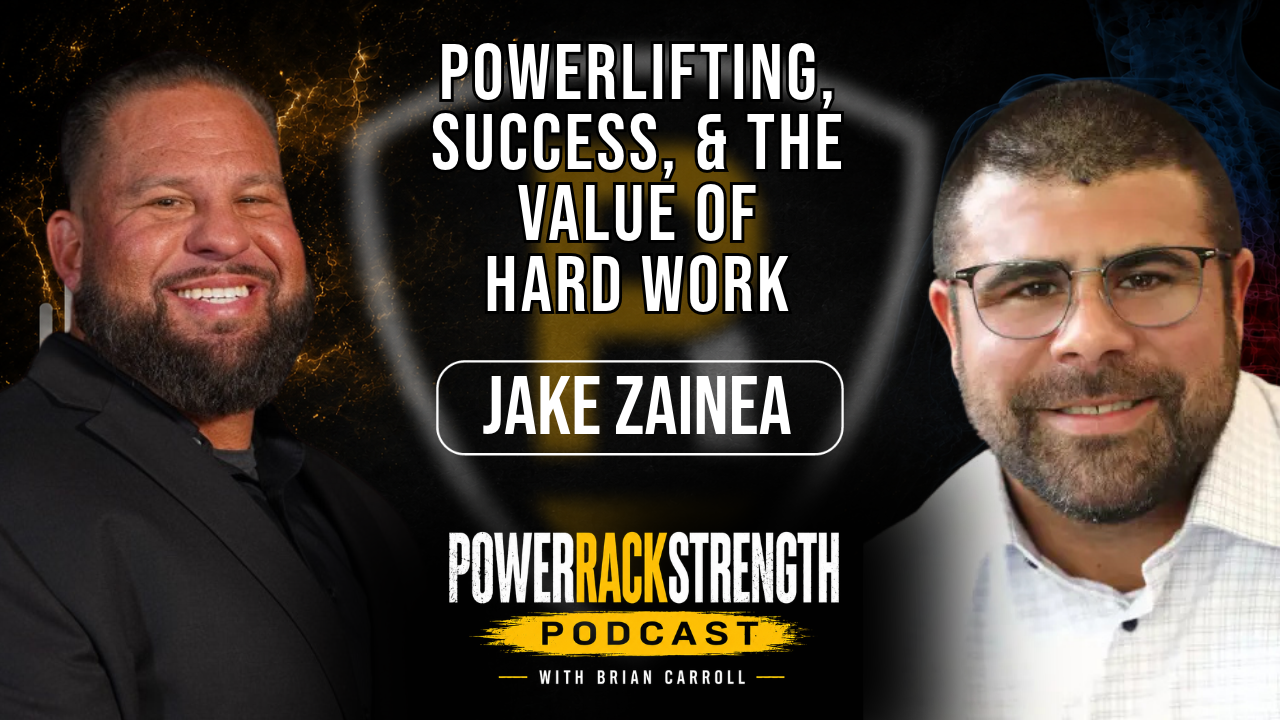
31 Oct Beyond the 2,000-Pound Total: Jake Zainea on Powerlifting, Success, and the Value of Hard Work
Watch the full video on Rumble!
Article Rundown
- Jake Zainea balances a successful optometry career with decades of competitive powerlifting.
- The importance of early detection and proper management of glaucoma and diabetic eye disease.
- How elite training environments, mentorship, and mental toughness accelerate progress.
- The persistence, technical adjustments, and discipline required to achieve a 2,000-pound powerlifting total.
Beyond the 2,000-Pound Total
What does it take to build a successful career, raise a family, and total over 2,000 pounds in powerlifting? My good friend Jake Zainea has managed to do all three, but his story goes far beyond what he has accomplished on the platform.
Jake is an optometrist, business owner, husband, father, and lifelong strength athlete. We sat down to discuss everything from eye health and college athletics to the powerlifting culture we grew up in, the challenges of chasing elite numbers, and what decades under the bar can teach you about life.
Building a Career While Chasing Strength
Jake has been competing in powerlifting since high school, but he has also built an impressive professional career. Alongside three business partners, he operates seven eye care clinics in Michigan, including Pleasant Optics in Mount Pleasant, where I have personally received excellent care.
We discussed the difference between optometry and ophthalmology. Optometrists provide primary eye care, including vision correction and management of conditions such as glaucoma and diabetic eye disease. Ophthalmologists are medical doctors who can perform eye surgery and often specialize in particular conditions. Jake’s clinics handle both routine vision care and medical eye management, referring patients to specialists when necessary.
Glaucoma, Diabetes, and Protecting Your Vision
One of our more serious discussions involved glaucoma, a condition that progressively damages the optic nerve and can eventually cause permanent vision loss. I have a longtime friend who has struggled with severe glaucoma since childhood, undergoing numerous surgeries simply to preserve what little vision remains.
Jake explained that glaucoma is not always accompanied by elevated eye pressure. Treatment generally focuses on slowing further damage through medication, laser procedures, or surgery. Unfortunately, established optic nerve damage cannot currently be reversed through standard treatment. We also discussed diabetic retinopathy, where prolonged high blood sugar damages retinal blood vessels. It reinforced how important early detection, consistent medical care, and long-term disease management really are.
Football, Financial Discipline, and Learning Gratitude
Before becoming a successful powerlifter, Jake played defensive line at Alma College in Michigan. Despite standing around 5 feet 8 inches tall, he used his strength, leverage, and explosiveness to occupy blockers and create opportunities for his linebackers.
That discussion eventually led us into the changing landscape of college athletics, particularly the money involved in name, image, and likeness deals. I believe young athletes receiving substantial money need financial guidance and perspective. Jake agreed, emphasizing the importance of mentorship, responsible spending, and gratitude. Success should create opportunities, not destroy someone’s appreciation for what they have earned.
The Powerlifting Culture That Made Us Better
Jake’s introduction to serious powerlifting came through our mutual friend Josh McMillan. As a teenager, Jake approached Josh at a local gym after being impressed by his size and strength. Josh welcomed him, offered guidance, and eventually introduced him to a crew of experienced lifters.
That reminded me of what I consider the golden era of powerlifting. We had incredible training sessions with guys like Matt Zane, Brian Schwab, Jeremy Frey, and other elite lifters. We pushed one another, handled enormous weights, and learned through direct competition.
Westside Barbell operated with that same fundamental principle under Louie Simmons. Great programming mattered, but the environment was equally important. When everyone around you is strong, focused, and determined to improve, you either rise to that standard or fall behind. That pressure helped me perform at levels I might never have reached training alone.
Knowing What You Know and What You Don’t
Another important subject was intellectual humility. Whether discussing spinal biomechanics, optometry, or strength training, nobody has every answer.
We talked about the Dunning-Kruger effect, which describes how limited knowledge can sometimes produce excessive confidence. I’ve learned that admitting uncertainty is not weakness. When someone asks me a question about their spine that I cannot confidently answer, I would rather investigate further than pretend to know something I don’t.
The Long Road to a 2,000-Pound Total
Jake’s pursuit of a 2,000-pound raw total demonstrated how difficult progress becomes at the elite level. In 2016, he squatted 660 pounds, benched 480, and deadlifted 727 without knee wraps. Those performances convinced him that 2,000 pounds was within reach.
However, transitioning into knee wraps introduced new challenges. Difficult competitions, injuries, and technical problems repeatedly interrupted his progress. One particularly frustrating issue involved the deadlift bar catching against his quadriceps, causing him to lose otherwise successful attempts.
After years of adjustments, Jake learned to refine his sumo stance, foot positioning, and patience off the floor. Rather than relying solely on brute strength, he improved the mechanics necessary to finish his lifts. Eventually, that persistence paid off with the 2,000-pound total he had chased for years.
Longevity, Training Partners, and Giving Back
We also discussed managing injuries and changing priorities as an athlete gets older. Jake has dealt with knee problems and other physical setbacks, but he still wants to compete. His future goals include a 500-pound competition bench press and potentially a 700-pound conventional deadlift.
More importantly, he wants to continue building the next generation of lifters. We discussed how a great training crew requires more than strong individuals. Everyone should contribute something, whether that is knowledge, encouragement, technical feedback, or simply showing up consistently.
The Lessons That Last Beyond Powerlifting
Toward the end of our conversation, Jake reflected on what he would tell his younger self. His advice included training the abdominal muscles consistently, developing a solid foundation, and understanding that hard work is only the minimum requirement for reaching an elite level.
We also compared the demands of building a professional career with those of competitive powerlifting. Jake admitted that becoming an optometrist may have been the more difficult accomplishment. Years of classes, clinical work, studying, and training required enormous discipline.
That perspective stuck with me. Powerlifting teaches you how to endure discomfort, solve problems, and keep working when progress stalls. But the greatest value comes when you apply those lessons outside the gym, becoming a better professional, teammate, mentor, and person.
Contact Info and More!
For more on Brian Carroll:
Website: PowerRackStrength.com
Email: Brian@PowerRackStrength.com
Instagram: BrianCarroll1306
For more on Jake Zainea:
Website: PleasantOptics.net
Buy Gift of Injury!
Buy Back Mechanic!
Buy Ultimate Back!
Buy Back Mechanic!
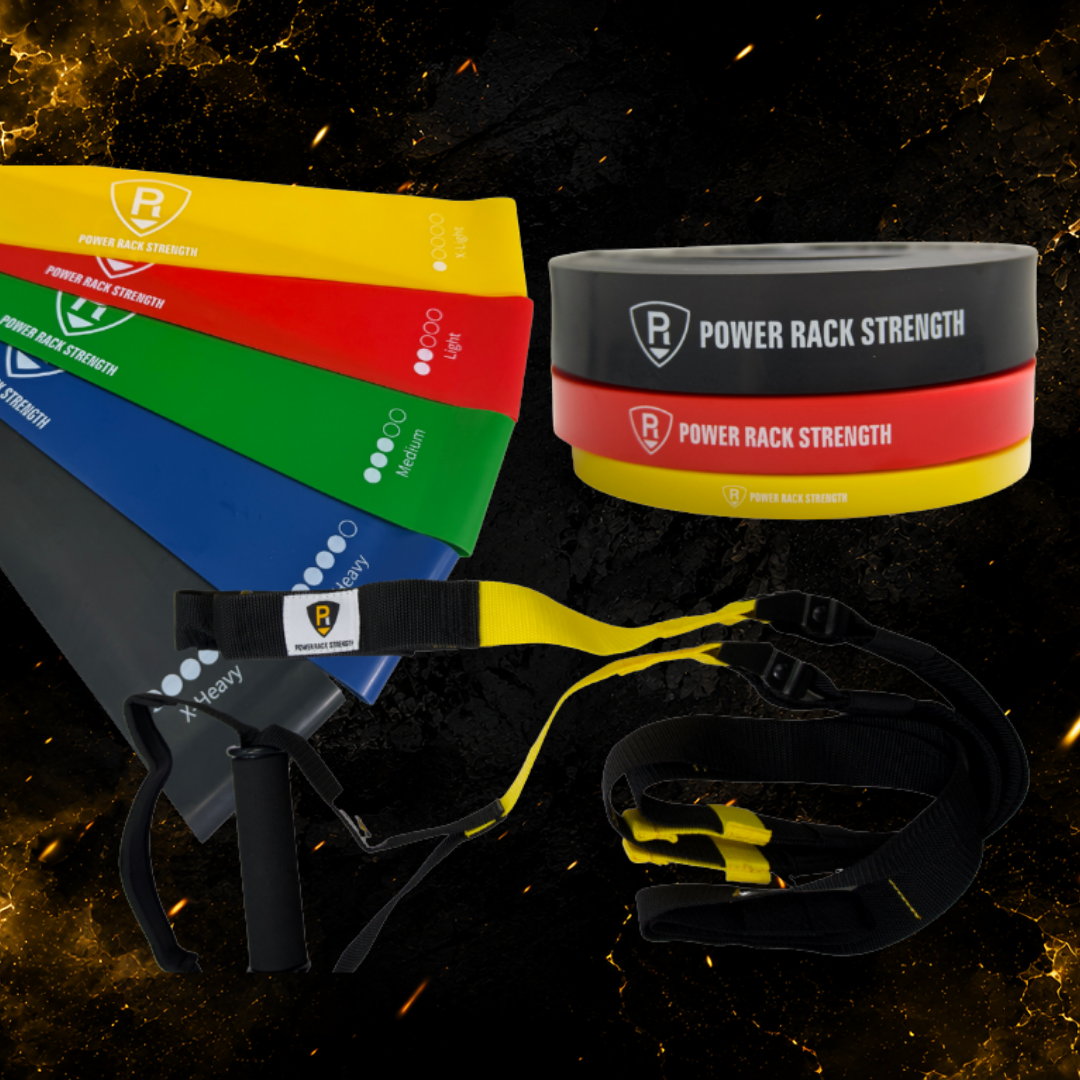
PRS Bands and Straps!

Sorry, the comment form is closed at this time.