



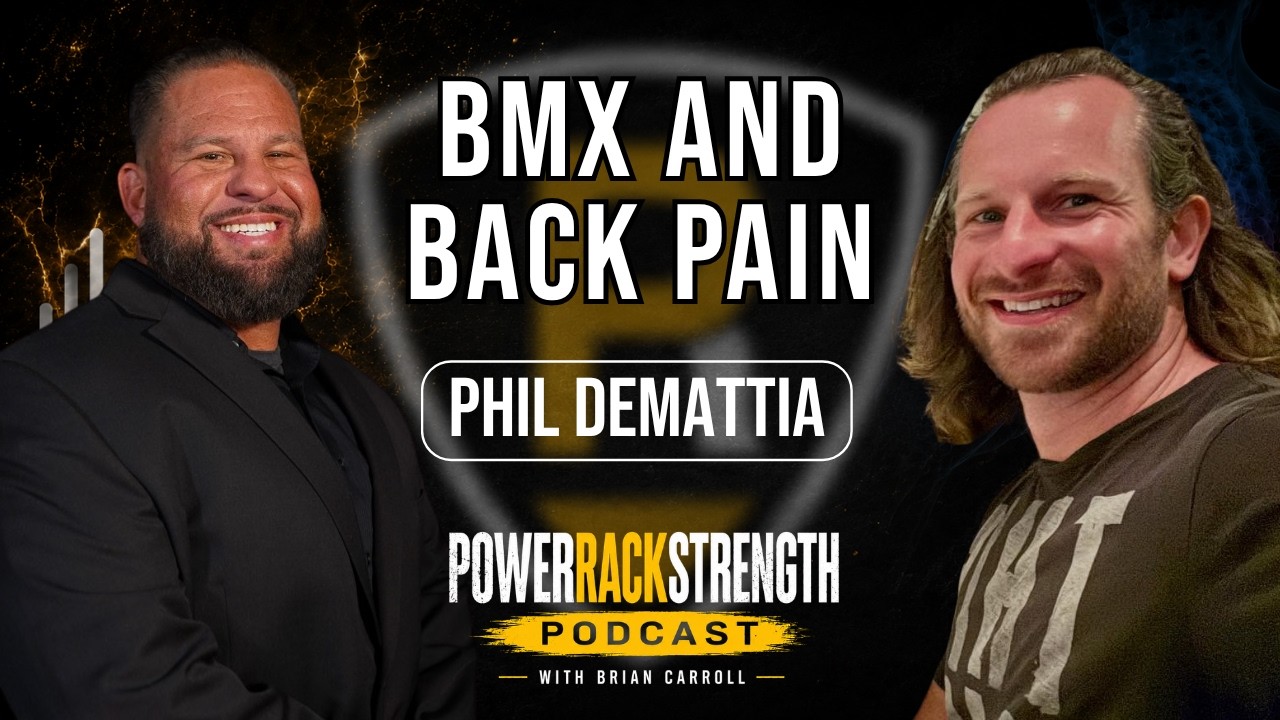
26 Jun From Extreme BMX to Rebuilding a Resilient Back
Article Rundown
- Years of BMX, injuries, and physical labor took a major toll on Phil’s body.
- Random stretching and strengthening kept irritating the real problem.
- Better spine hygiene and workload management helped calm his symptoms.
- Gradual loading rebuilt his confidence, strength, and resilience.
Phil Was Never an Average Athlete
My client and friend Phil has one of the most interesting backgrounds of anyone I have worked with. He grew up in the UK and became a highly respected street BMX rider, known for original tricks, major video parts, and the kind of riding that repeatedly put his body in dangerous situations.
Even when a BMX trick is landed correctly, the athlete still has to absorb tremendous force. Phil rode hard tires with very little forgiveness, so his body took the impact. He also pushed through rolled ankles, crashes, head trauma, and countless other injuries because that was simply part of the culture.
That history matters. Injuries rarely appear out of nowhere. They are often the final result of years of accumulated stress, poor recovery, and movement strategies that eventually stop working.
The Damage Continued After BMX
Phil’s physical abuse did not end when he stopped riding. He moved into weight training, distance running, rock climbing, American Ninja Warrior, and physically demanding metal fabrication work.
During an American Ninja Warrior accident, he tore multiple muscles away from the upper arm and required a major shoulder reconstruction. His fabrication business also demanded long hours of welding, polishing, lifting, reaching, and working in awkward positions.
Phil had experienced back episodes since he was a teenager. He would ride hard for several days, his back would lock up, and then he would eventually return to doing whatever he wanted. Over time, those episodes became more serious. Eventually, he developed significant neurological symptoms. His toes went numb, his calf weakened, he lost muscle, and he had to relearn how to properly use part of his lower leg.
Working Harder Was Not the Answer
Like many motivated athletes, Phil initially believed that a weak muscle simply needed more strengthening. He performed calf work, electrical stimulation, stretching, mobility drills, and countless other treatments. The problem was not that Phil lacked effort. The problem was that some of his efforts continued irritating the injured tissues and nerves.
He would aggressively twist his spine to loosen it, train through symptoms, and work with people who treated him like a healthy athlete instead of identifying the injury mechanism. Phil did not need more random work. He needed to stop repeatedly picking the scab.
Changing the System Around the Injury
When Phil and I began working together, one of the first things I told him was that he needed to temporarily reduce the physical burden of his business. That did not mean quitting his career or becoming fragile. It meant using his intelligence and leadership instead of proving that he could personally carry, weld, polish, and move everything.
Phil delegated more physical work to his employees and spent more time planning projects, improving his models, and solving problems before entering the shop. He also changed smaller parts of daily life, including how he lifted groceries, handled equipment, and positioned his work. These changes were not dramatic, but they reduced the constant accumulation of irritation.
Spine Hygiene Became Automatic
Spine hygiene does not mean walking around rigid and afraid to move. It means learning how to move competently.
Phil learned to lunge toward the floor instead of repeatedly folding through his lumbar spine. He used lumbar support when sitting, created the right amount of stiffness before standing, and moved through his hips instead of twisting through an irritated back.
At first, these strategies required conscious effort. Eventually, they became automatic. Movement competence creates movement confidence. Once Phil understood how to move without provoking his symptoms, the fear surrounding the injury began to disappear.
Reintroducing Load
Removing irritation was only the first phase. Eventually, Phil needed load. We began with kettlebells and controlled movements before introducing very light deadlifts from elevated blocks. As he demonstrated that he could tolerate the work, we gradually increased the weight and lowered the starting position.
The sumo deadlift became especially useful because it closely matched many of the positions Phil encounters in fabrication. He is an occupational athlete, so his rehabilitation cannot stop at sitting comfortably. He needs enough resilience to work, hike, train, travel, and live his life.
Phil has now returned to meaningful deadlifting without constantly creating major flare-ups. His long-term goal is a 500-pound deadlift, but he understands that every workout is not a chance to prove something.
Trading What You Want Now for What You Want Most
Phil is still highly competitive. Whether it is BMX, fabrication, lifting, running, or playing pool, he does not approach anything casually. The biggest change has been learning to manage that drive instead of allowing it to control every decision.
Some days, the intelligent move is to remove weight. Some weeks, it means skipping an activity because his total workload is already at capacity. That is not weakness. It is maturity.
Today, Phil can run his business, hike long distances, train hard, deadlift, and manage the occasional neurological feedback without panicking. He understands what increases his symptoms, what settles them, and how to adjust before a small problem becomes another major injury. The goal was never simply to make his back feel better for a few days. The goal was to build a system that allowed him to become resilient for the rest of his life.
Buy Gift of Injury!
Buy Back Mechanic!
Buy Ultimate Back!
New PRS Training System!

Sorry, the comment form is closed at this time.