



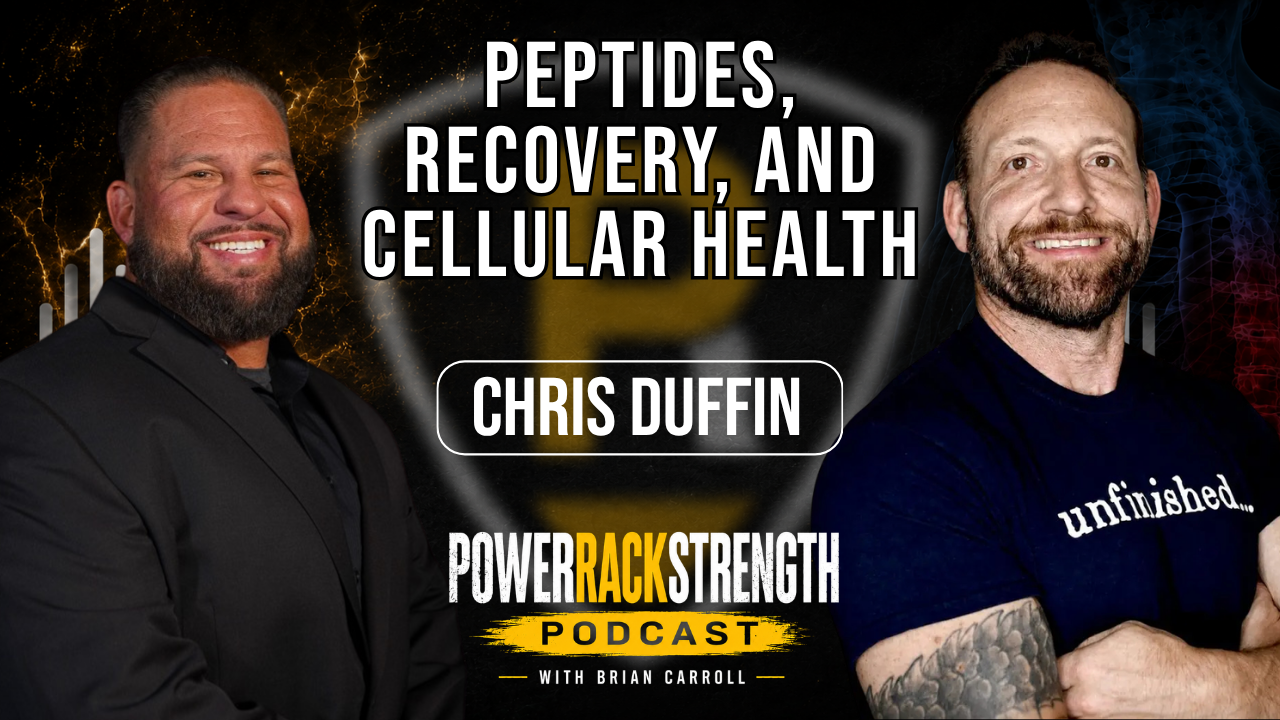
24 Oct Are We Optimizing Our Health or Just Chasing the Next Compound? Chris Duffin on Peptides, Recovery, and Cellular Health
Watch the full video on Rumble!
Article Rundown
- Chris Duffin breaks down advanced proteomics testing and why genetics alone cannot determine an individual’s current health or treatment needs.
- Explore cellular health, mitochondrial function, and why balancing biological stimulation with proper recovery is essential for long-term performance.
- Learn about emerging compounds, including SS-31, SLU-PP-332, urolithin A, epitalon, and TUDCA, along with their proposed applications and limitations.
- Discover why individualized assessments, proper sleep, nutrition, and addressing underlying problems should come before adding peptides or supplements.
Are We Optimizing Our Health or Just Chasing the Next Compound?
There is a big difference between improving your health and constantly adding something new because somebody says it works. Whether we are talking about peptides, supplements, training, or recovery, I keep coming back to one question: What does this individual actually need?
I brought Chris Duffin back for part two of our conversation to discuss what he is working on through Enhanced Executive, how he evaluates biological function, and why the newest compound is not necessarily the answer. We covered a tremendous amount of ground, but the common thread was understanding the person before choosing an intervention.
Looking Beyond Traditional Blood Work
Chris opened with proteomics, an emerging approach that measures large numbers of proteins to help researchers and clinicians understand biological activity. He is using this type of testing alongside conventional blood work to evaluate whether changes in exercise, nutrition, and other interventions are producing the responses he wants to see. He also discussed his personal experience managing autoimmune-related health issues, including Hashimoto’s thyroiditis.
What interested me was the distinction between knowing your risk and understanding your current condition. Genetic testing can reveal predispositions, but a predisposition is not a diagnosis. Your training history, lifestyle, symptoms, assessments, and blood markers provide necessary context. I would never want to prescribe somebody an entire protocol based solely on a genetic report without first understanding the individual in front of me.
Building a Better Cellular Environment
Chris also shared plans for an Enhanced Executive supplement system organized around three ideas: cellular hydration, nutrient transport, and cellular signaling. His argument was that a signal is only useful when the environment receiving it is functioning properly. Having spent years working with injured athletes and people trying to rebuild their performance, I appreciate that distinction.
He is also developing longer educational videos exploring conditions such as arthritis, atherosclerosis, and fibromyalgia. These are intended as frameworks for discussion, not personalized diagnoses or replacements for a qualified medical professional.
Why More Stimulation Is Not Always Better
Our conversation then moved into what I believe is one of the biggest mistakes in performance and longevity circles: continuously stimulating the same systems without allowing them to recover. Training illustrates this perfectly. You stress the body, then give it the opportunity to adapt. You cannot endlessly increase the stress and expect improvement.
Chris discussed AMPK and mTOR, two important signaling pathways involved in energy regulation, growth, and adaptation, along with the body’s changing redox balance. We talked about SLU-PP-332, urolithin A, ketogenic diets, cold exposure, and the temptation to push every intervention harder. These compounds and approaches differ considerably in evidence and safety, but the broader point remains: feeling stimulated is not the same thing as becoming healthier.
Repair Before You Demand More Performance
Consider the former athlete who is now a high-performing executive. He still trains, works long hours, sleeps poorly, and wonders why he cannot recover anymore. That person is different from someone who has been sedentary for years and needs help establishing basic activity and metabolic health. Giving both people the same protocol makes little sense.
Chris used mitochondria, the structures involved in producing cellular energy, to explain this distinction. We discussed SS-31, also known as elamipretide, which interacts with cardiolipin, a lipid important to mitochondrial membrane function. It has an FDA-approved use for certain patients with Barth syndrome, but its broader application to recovery and performance remains investigational. We also discussed humanin and urolithin A as areas of interest in mitochondrial health. None replaces addressing poor sleep, excessive stress, inadequate nutrition, or inappropriate training loads.
Sleep, Biological Rhythms, and Risk
From there, we covered epitalon, an experimental peptide Chris has explored in connection with circadian rhythms, melatonin signaling, and aging research. Your circadian rhythm helps coordinate sleep and wakefulness across the day. Although the research is interesting, strong clinical evidence for the anti-aging and travel-related benefits discussed remains limited.
We also revisited cardarine, which has attracted attention for endurance performance despite serious safety concerns, including cancer findings in animal studies. The lesson is not that every new compound is automatically dangerous. It is that potential benefits cannot be separated from risks, individual circumstances, and the quality of the evidence.
Fix the Problem Instead of Adding More Fuel
Later, Chris challenged the popularity of high-dose protocols and NAD-related products. His analogy was simple: if your vehicle has a leaking fuel line, adding more fuel does not repair the leak. We discussed TUDCA, a bile acid derivative studied for its effects on bile-related conditions and cellular stress, including stress within the endoplasmic reticulum, where proteins are processed and folded.
We also touched on BAM15, an experimental mitochondrial uncoupler being studied in preclinical research. Unlike a standard fat-loss supplement, mitochondrial uncoupling changes how cells use energy, and its safety and effectiveness in humans are not established. We discussed the dangerous uncoupler DNP as a reminder that manipulating energy expenditure can carry severe risks.
Individualization Will Always Matter
Before wrapping up, Chris shared his perspective on compounds he considers overrated or overlooked, including follistatin-related products, ARA-290, and humanin. Some have interesting preliminary research, but that does not make them established therapies for athletes or the general public. We also returned to his work at Enhanced Executive and the importance of looking at each client individually.
My biggest takeaway from this conversation is straightforward. Stop chasing results without understanding what is driving the problem. Establish a baseline, evaluate your training and recovery, correct the fundamentals, and work with qualified professionals when medical questions are involved. The goal should never be to collect the most interventions. It should be to find the appropriate ones, if any are needed, and give your body the opportunity to respond.
Contact Info and More!
For more on Brian Carroll:
Website: PowerRackStrength.com
Email: Brian@PowerRackStrength.com
Instagram: BrianCarroll1306
For more on Chris Duffin:
Website: EnhancedExecutive.com
Instagram: Mad_Scientist_Duffin
Buy Gift of Injury!
Buy Back Mechanic!
Buy Ultimate Back!
Buy Back Mechanic!
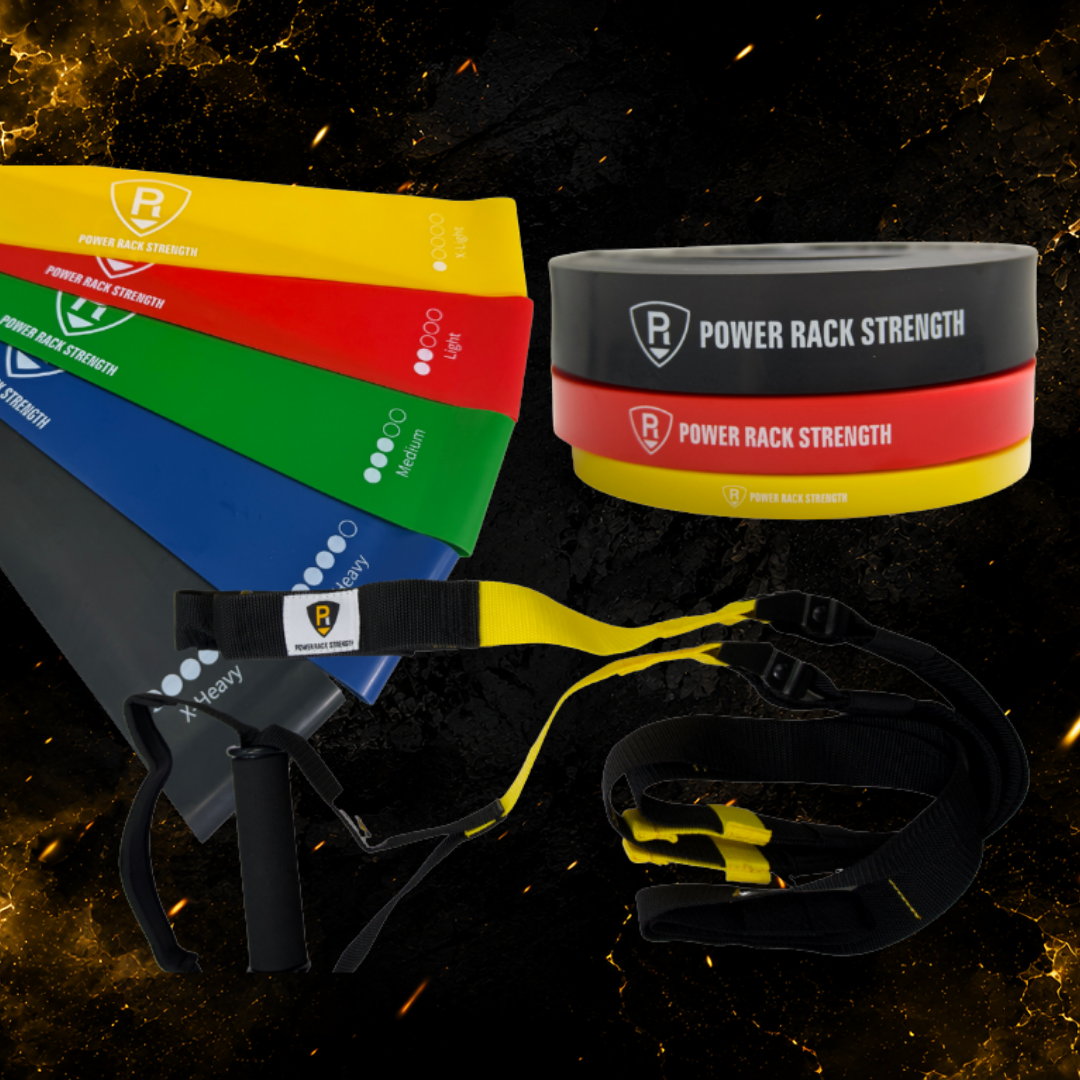
PRS Bands and Straps!

Sorry, the comment form is closed at this time.