



10 Jun How to Heal a Disc Injury: Stop Guessing and Respect the Process
Article Rundown
- Identify the movements and positions triggering your pain
- Calm inflammation before progressing into harder rehabilitation
- Build core stability and improve daily spine mechanics
- Gradually reload the spine with patience and control
Stop Guessing and Respect the Process
If you are dealing with a disc injury, you have probably been told to stretch more, strengthen your core, and give it time. For many of the people who come to see me, that advice has not worked. It is not because they are permanently broken. It is because the approach they were given was too general and did not address the actual mechanism driving their pain.
Healing a disc is not random, and it is not something you can force through effort alone. It is a mechanical and biological process. You have to identify what is aggravating the injury, create an environment where the symptoms can settle, and then gradually rebuild the spine’s ability to tolerate load. I have gone through this process myself, and I have helped hundreds of people navigate it. The people who make progress are usually the ones who follow the process patiently instead of constantly searching for a shortcut.
Identify and Remove the Trigger
This is where most people fail. They skip the proper assessment and immediately begin a cookie-cutter rehabilitation program. They start stretching, strengthening, doing yoga, or following random exercises they found online without understanding what is actually causing their pain. Is the pain driven by flexion, extension, rotation, prolonged sitting, standing, compression, or shear? Each of those loads the spine differently and may require a different approach.
If you continue exposing the injured area to the exact movement or position that provokes your symptoms, you are not allowing it to heal. You are picking the scab. I call this poking the bear. You may sit poorly for hours, train through pain, stretch aggressively first thing in the morning, or repeatedly test the painful movement to see if it still hurts. Then you wonder why the symptoms keep returning. The first step is simple: identify the trigger and stop repeatedly provoking it.
Create an Environment for Healing
Once the irritation has been reduced, you need to find positions and activities that provide relief. That may include short, frequent walks, lying on your stomach, using proper lumbar support, improving your posture, or temporarily avoiding movements that increase symptoms. The exact strategy depends on the individual, which is why blindly copying someone else’s rehabilitation plan is rarely the best answer.
Feeling better does not necessarily mean the disc is fully healed. It means the symptoms and inflammation may be starting to calm down, giving you a baseline from which you can begin rebuilding. The goal at this stage is not to prove how tough you are or see how much discomfort you can tolerate. The goal is to stop feeding the inflammatory cycle long enough for the body to settle and begin adapting.
Build Stability Before Chasing Mobility
Many people assume their back hurts because they are too tight, so they immediately begin stretching and mobilizing everything. In some cases, the real issue is a lack of stability, control, or core endurance. Excessively stretching an already unstable spine can make the problem worse, especially when the person has not yet developed the ability to brace and control movement under load.
You need to learn how to create the appropriate amount of stiffness through the torso, brace without turning every movement into a maximal effort, and move through the hips instead of repeatedly moving the spine under load. This is where spine hygiene becomes important. How do you sit, stand, walk, get out of bed, pick something up, or lower yourself into a chair? You can perform a few good rehabilitation exercises each morning, but if you spend the rest of the day repeatedly aggravating your back, you are working against yourself.
Understand How the Disc Adapts
Discs are not simply dead structures that can never change. They respond to the environment and loading demands placed on them. With poor mechanics and repeated overloading, they can continue to break down. With appropriate loading and enough time, the tissues can become stiffer, more resilient, and better able to tolerate force. Herniated disc material may also be reabsorbed by the body over time.
I have seen substantial structural changes in my own spine while returning to extremely high levels of strength. However, none of that happened by accident. It required removing painful triggers, improving movement patterns, managing posture, and gradually introducing the correct amount of load. The disc follows the environment you give it. If that environment is chaotic and constantly irritating, healing will remain difficult. If it is controlled and progressive, adaptation becomes possible.
Rebuild Capacity Gradually
One of the worst mistakes you can make is feeling slightly better after a few weeks of walking and basic core work, then immediately loading a heavy barbell. Pain reduction is not the same as full tissue adaptation. The spine and surrounding tissues need time to regain the ability to bear load, stiffen appropriately, and tolerate the forces created during training and everyday movement.
Start with movements you can tolerate, such as bodyweight patterns, light carries, controlled hip hinging, and basic strength exercises performed with good mechanics. Progressive overload should be based on what your body can handle today, not what you used to lift, what your ego wants, or what someone else is doing online. Over time, you can rebuild strength, endurance, awareness, and resilience. That process should also include planned deloads so the tissues have an opportunity to adapt instead of being constantly overwhelmed.
Do as Much as Necessary, Not as Much as Possible
There is no magic stretch, injection, peptide, adjustment, or procedure that replaces the rehabilitation process. Some medical interventions may be appropriate for carefully selected cases, but even then, you still have to heal. You still have to manage your movements, rebuild your capacity, take time away from aggravating activities, and respect the biological timeline of the tissue.
You do not heal your back by doing more. You heal it by doing enough. As legendary strength coach Buddy Morris says, “Do as much as necessary, not as much as possible.” If the minimum effective amount is working, let it work. You can always add more volume, intensity, frequency, or load later. Healing a disc injury requires patience, discipline, and the willingness to stop repeatedly testing your limits. Remove the triggers, calm the symptoms, establish stability, and rebuild your capacity one step at a time. There is no shortcut, but there is a process. When you respect that process, the spine can become far more resilient than many people realize.
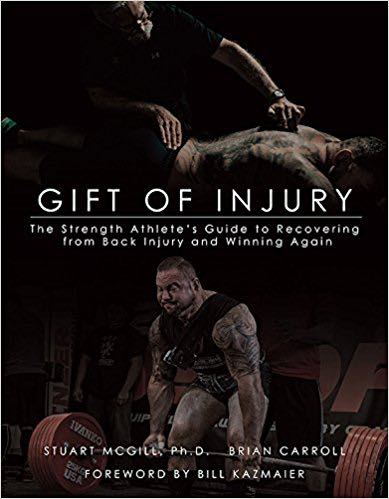
Buy Gift of Injury!
Buy Back Mechanic!
Buy Ultimate Back!
Buy 10/20/Life!

Sorry, the comment form is closed at this time.