



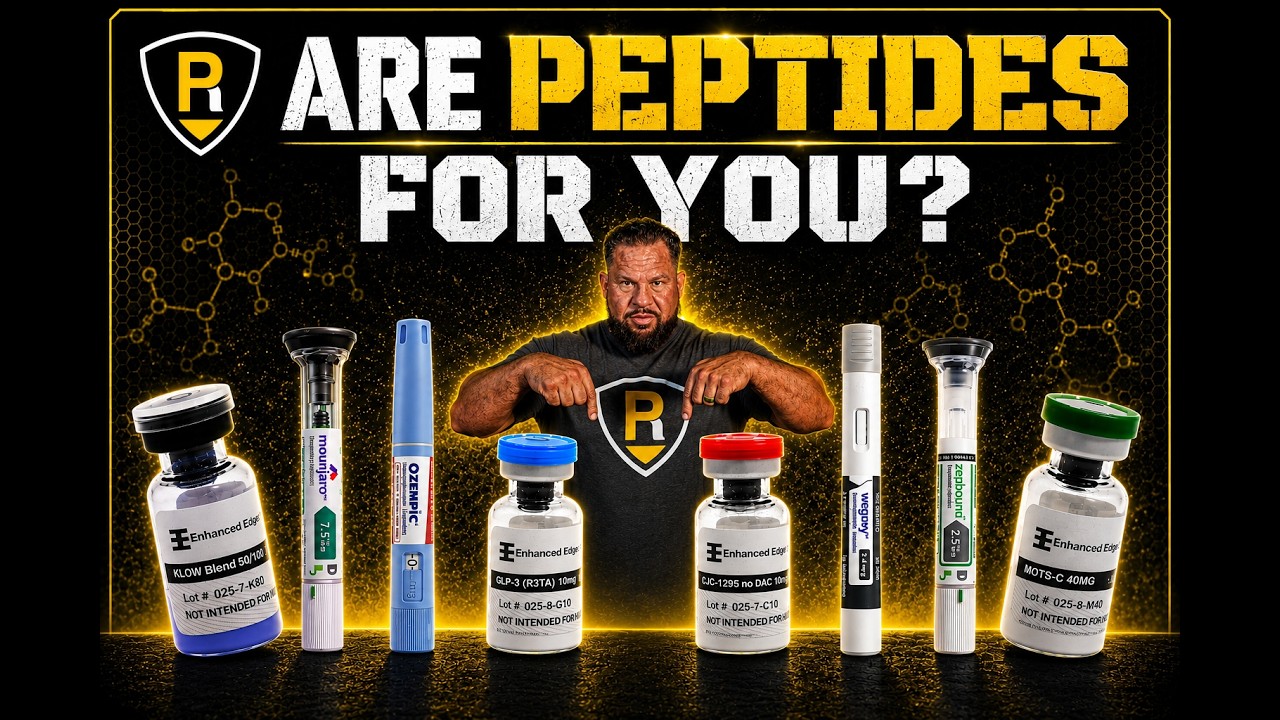
25 Jun Should You Use Peptides?
Article Rundown
- Peptides can support healing, recovery, and inflammation management.
- They should never replace training, nutrition, sleep, or rehabilitation.
- Always understand the compound, protocol, risks, and source.
- Make an informed decision instead of blindly following trends.
Should You Use Peptides?
One of the most common questions I receive after discussing peptides is simple: Should I start using them? People want a clear yes-or-no answer, but the truth is that peptides are not appropriate for everyone. Your health, goals, current condition, willingness to do the foundational work, and access to a trustworthy source all matter.
Before we go any further, I am not a medical doctor, and this is not medical advice. I am sharing my personal experience after using peptides on and off for nearly 20 years and working with many clients who have incorporated them into their recovery protocols. You still need to research these compounds, consult qualified professionals, and make an informed decision for yourself.
Nobody Should Have to Convince You
My first rule is straightforward: if you strongly believe you should not use peptides, then you probably should not use them. Nobody should pressure you into injecting something you do not understand or feel comfortable taking.
You may investigate the subject further and eventually change your mind, but that decision should come from education rather than persuasion. Peptides are not magic, and they should not be used simply because they are trending online. Before starting anything, you need to understand what the compound is, why you are considering it, what the risks may be, and whether it genuinely fits your situation.
There are people who may stand to benefit from additional support. Someone struggling to heal from an injury, manage persistent inflammation, or recover despite doing the appropriate rehabilitation may decide to explore compounds such as BPC-157, TB-500, or ARA-290. That does not mean everyone with an ache or pain needs to begin building an enormous peptide protocol.
Peptides Should Support the Foundation
Peptides should never replace proper training, rehabilitation, nutrition, sleep, or behavioral change. At best, they may support those things. They cannot rescue a terrible program or undo years of neglect while you continue repeating the exact habits that created the problem.
Weight-loss drugs are a perfect example. Some people struggle tremendously with food cravings, emotional eating, and using food as a response to stress. I understand that battle. I have had moments when I inhaled enough cheesecake to feel like I needed to repent afterward. Food is readily available, socially accepted, and capable of producing a powerful reward response. For certain people, metabolic medications may provide enough assistance to regain control and begin changing their habits.
However, I am not a fan of using traditional GLP-1 medications as an excuse to remain sedentary. Too many people suppress their appetite, fail to exercise, lose valuable muscle tissue, become lethargic, and continue increasing the dosage because they never addressed the behaviors underneath the weight gain. When the medication is removed, the old habits remain, and the weight often returns.
A Tool for Change, Not an Escape From It
Newer triple-agonist drugs such as retatrutide appear promising because they may affect appetite, energy expenditure, and fat oxidation through multiple pathways. Some early evidence and case reports have also raised questions about possible anti-inflammatory effects. However, we still need to separate the direct effects of the drug from the benefits someone receives simply by losing a substantial amount of body fat.
These compounds also require careful application. Rapidly losing weight without resistance training, adequate protein, and intelligent programming can cost a person the muscle mass that was helping stabilize an already vulnerable joint. Becoming lighter does not automatically mean becoming healthier, stronger, or more resilient.
The goal should be to use the assistance as an opportunity to build better habits. You still need to eat enough quality food, train appropriately, retain muscle, and learn how to manage cravings. If a peptide or medication helps you create lasting behavioral change, it may be a useful tool. If it only allows you to avoid addressing the actual problem, you are building another form of dependency.
Know Exactly What You Are Taking
Another major reason not to use peptides is that you do not have a reliable source. Do not inject a mystery vial obtained from someone at the gym, your friend’s little brother, or a guy operating behind the grocery store. If the product is poorly labeled, improperly stored, contaminated, or inaccurately dosed, you have no idea what you are putting into your body.
Trusting the source matters, but so does understanding the protocol. You should know what the compound is intended to do, how it is commonly administered, how long it may be used, and what adverse effects to watch for. Do not blindly combine six or seven compounds because somebody posted a stack online.
Speak with someone who genuinely understands these substances (Like Chris Duffin). That may be a medical professional experienced with peptide therapy or a knowledgeable consultant who has spent years studying and applying them. A title alone does not guarantee expertise, but neither does confidence on social media. Shop around for information, compare sources, and ask questions before making your decision.
So, Should You Start Using Peptides?
I am a fan of peptides, and I have personally used many of them over the years. I have also seen clients use them to support healing, manage inflammation, improve recovery, and regain control of their nutrition. That still does not mean I believe everybody should take them.
Peptides may make sense when the foundations are already being addressed, a specific problem has been identified, the potential benefit justifies the risk, and the person has access to reliable products and informed guidance. They make far less sense when someone is chasing trends, avoiding hard work, or injecting random compounds without understanding them.
Before you begin, educate yourself until you are comfortable making your own informed decision. If you remain uncertain, do not use them. Peptides can be valuable tools, but they are still only tools. Whether they help or hurt depends largely on why, how, and by whom they are being used.
Buy Gift of Injury!
Buy Back Mechanic!
Buy Ultimate Back!

Buy 10/20/Life!


Sorry, the comment form is closed at this time.