



23 Jan A 2016 Conversation That Still Matters: Back Pain, Rehab, and the Reverse Hyper
Article Rundown
- The reverse hyper isn’t inherently bad, but it’s often misused for back rehab
- Flexion under load does not fix injuries caused by flexion under load
- Core stability and movement quality matter more than exercise selection
- Back pain is manageable and can lead to better lifting if addressed correctly
–
Video Credits: @MadScientistDuffin
Chris Duffin’s Website: enhancedexecutive.com
Back Pain, Rehab, and the Reverse Hyper
Back in 2016, Chris Duffin and I were both presenting at EXOS. Different backgrounds, different paths, but a shared reality. We had both been through serious back injuries. Not theoretical ones. Not textbook cases. Real injuries that forced us to rethink how we trained, how we moved, and how we lived day to day.
During that weekend, multiple clinicians asked us the same question over and over.
“What are your thoughts on the reverse hyper?”
It’s a fair question. The reverse hyper is a staple in powerlifting culture. But context matters. And that’s what this conversation was really about.
The Reverse Hyper Is Not the Villain — But It’s Often Misused
Let me be clear. The reverse hyper itself is not a bad tool. If it’s done correctly, with strict control of pelvic position and without inducing spinal flexion, it can be useful for glute and hamstring development. I’ve coached it. I’ve used it. I’ve seen it used well. The issue is how it’s commonly applied in rehab settings.
Most back injuries, outside of trauma like car accidents, happen because of poor movement under load. Specifically, poor control of the pelvis and poor awareness of spinal position. So when someone is fresh off a disc injury and we put them on a device that requires a very high level of pelvic control, we’re asking them to do the exact thing they already failed at. That’s not rehabilitation. That’s a gamble.
Why Flexion Under Load Doesn’t Fix Flexion Injuries
The most common injury people are dealing with is a herniated disc. Yet many are told that swinging through loaded spinal flexion is somehow going to fix an injury that was caused by flexion under load in the first place. That logic doesn’t hold up.
I’m not here to say the reverse hyper is useless. I am saying I would not send someone with a disc injury to do sets of reverse hypers for rehab. I wouldn’t do it myself either. I learned this the hard way.
Back in 2009, I used to start my training days with reverse hypers. I’d feel great for about fifteen minutes. Then my back would seize up worse than before. That temporary relief comes from spinal stretch receptors, not from actual healing. Over time, all you’re doing is desensitizing pain while continuing to irritate the disc. That’s why so many people feel stuck in a loop. They’re not letting the area heal. They’re repeatedly poking the wound.
There Are Better Options for Back Rehab
If someone is dealing with back pain, especially disc-related pain, there are usually far better options than hyperextensions or reverse hypers. Simple things work. Bird dogs. Walking. Hanging from a pull-up bar for gentle traction. These are supported by both hard science and real-world experience. The goal early on is stability, not motion under load.
I’ve helped people who couldn’t get out of bed walk onto a national-level platform eight weeks later. Back pain is not a life sentence. I’ve had multiple herniated discs and still squatted and deadlifted over 900 pounds. My best lifts came after my injuries, not before them.
Injury Forces You to Become a Better Lifter
One thing Chris and I both agreed on is this. A serious back injury forces awareness. You can’t be casual anymore. You have to care about positions. You have to respect the load. You have to move with intent.
That awareness made me a better lifter. I had to think more. Focus more. Control more. I couldn’t rely on sloppiness anymore. And that carried over into better performance. Form matters even more under load, not less.
The Big Three: Building a Stable Foundation
Core stability is king. If you want quality movement, you need a stable foundation. The McGill Big Three are a staple for a reason. Bird dogs teach you to stabilize while moving. Side planks and rolling variations teach you to keep the pelvis and ribcage connected. The modified curl-up builds stiffness without the shearing forces of traditional sit-ups.
If you want visible abs, avoid endless sit-ups and crunches. They break down bracing ability and disconnect the abs from how they’re actually supposed to function. The core is meant to act as a rigid outer sheath, not a collection of isolated muscles. Stir-the-pot variations and static bracing drills will light your abs up harder than any flexion exercise ever will.
Managing Pain When It Shows Up
Stability work helps prevent injury. But what about days when you’re already in pain? That’s where movements like the cat-camel and McKenzie press-ups come in (assessment is NEEDED to know if these are for you or not). Done properly, they can reduce symptoms without medication (if appropriate). This MIGHT a make massive difference for people with flexion intolerance. Again, an assessment is needed here to know if this is the correct prescription.
I also like dead bugs for reinforcing ribcage and pelvis positioning. They tie everything together and reinforce the same patterns you need in bird dogs and planks.
Capacity Is the Real Limiting Factor
One of the biggest mistakes people make is forgetting that capacity is limited. Everything you do is a transaction. Good or bad. If you’re sloppy all day outside the gym, you’re burning through your balance before you ever touch a barbell. Then you wonder why heavy lifting feels worse.
You don’t need to brace like you’re pulling a thousand pounds just to get out of your car. But you do need awareness. You need to move well automatically. We watched clinicians this weekend talk about movement quality, then immediately bend and twist to pick mats off the floor with terrible mechanics. Those little things add up. Good movement has to become second nature.
These Principles Apply to Everyone
This conversation wasn’t about powerlifting. EXOS didn’t bring us in to talk about squats and deadlifts. The room was full of physical therapists, chiropractors, and coaches working with Olympic lifters, sprinters, and the general population. The principles are universal.
Back pain is manageable. It is not a life sentence. With the right strategies, awareness, and patience, people can rebuild capacity and get back to doing what they love. That’s what this conversation was about in 2016, and it’s why it still matters today.
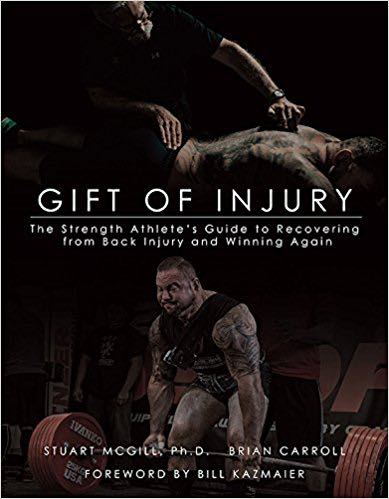
Buy Gift of Injury!
Buy Back Mechanic!
Buy Ultimate Back!
Buy 10/20/Life!

Shop PRS CBD!


Sorry, the comment form is closed at this time.