



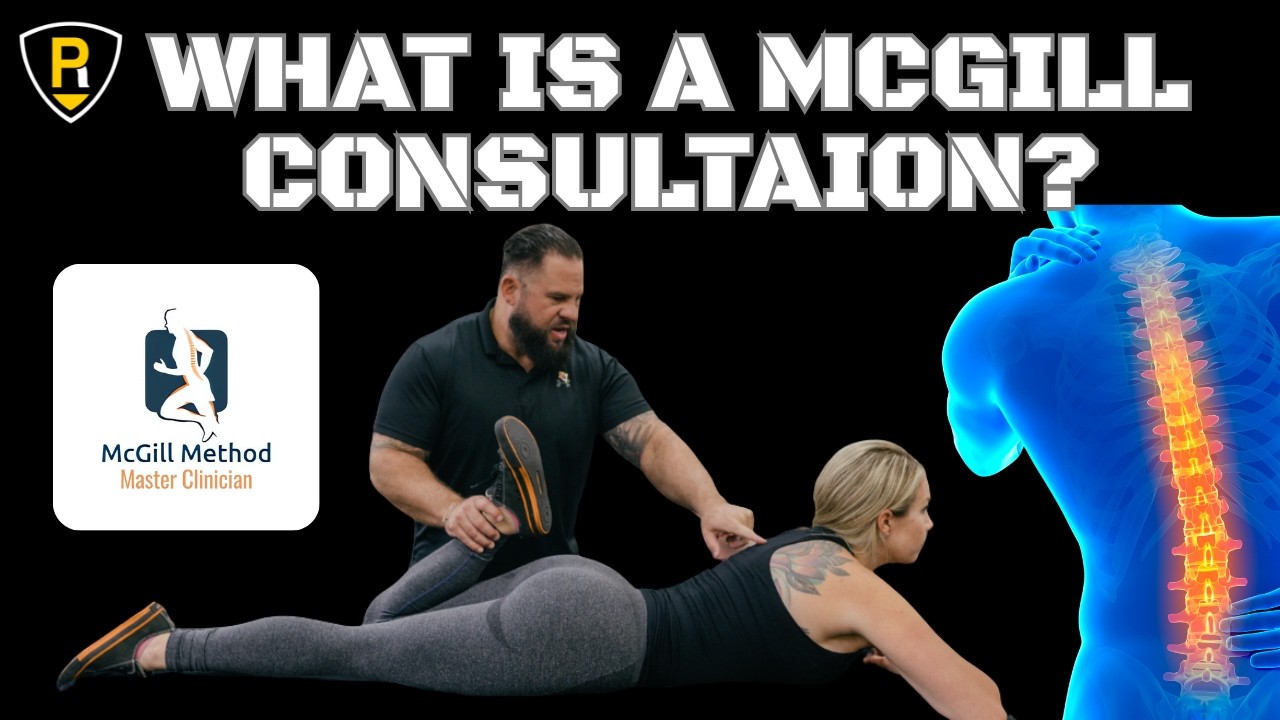
03 Apr What a McGill Three-Hour Consultation Actually Is
Watch the full video on Rumble!
Article Rundown
- This isn’t physical therapy—it’s a full mechanical investigation to find the true cause of your back pain
- Every step is individualized, from movement analysis to identifying your exact pain triggers
- You leave with a clear plan: what causes pain, what reduces it, and how to move going forward
- It’s for people who are done guessing and want real answers—not symptom-based treatment
What Is A McGill Consultation?
When people hear “three-hour back consultation,” they immediately assume it’s just a longer version of physical therapy. It’s not even close. This isn’t random exercises, stretching, or someone poking around and guessing. This is a full mechanical investigation of your spine, your movement, and your pain.
The entire goal is simple: identify the true cause of your pain so we can remove it. Not mask it, not chase symptoms, not throw generic treatments at it and hope something sticks. The McGill method is about identifying pain mechanisms. Once you understand what drives your pain and what reduces it, you’re already ahead of where most people ever get in the traditional system.
Step One: Playing Detective
The process starts with a detailed interview, and this is where most people realize how different this is. I’m not rushing you through a checklist. I’m watching everything.
How you sit down. How you shift in the chair. Whether you lean to one side. How you move when you’re engaged in conversation. These small things tell a story. This is pattern recognition, and it matters more than people think.
We go through how your pain started, what makes it worse, what makes it better, what you’ve tried, and what’s failed. We also address fear. A lot of people are afraid to move because they’ve never been taught how to move properly. My job is to build both movement confidence and movement competence, because you don’t get one without the other.
Step Two: Movement and Posture Analysis
Once we move out of the interview, we look at how you actually function. How you stand, walk, hinge, bend, and perform your daily tasks.
We’re looking for things like loss of stability, poor bracing strategies, asymmetries, and compensations. Yes, we consider structural issues like disc bulges, but we don’t stop there. A diagnosis on paper doesn’t tell the full story. Two people can have the same MRI and completely different pain experiences.
This is where we connect what your body is doing with what your spine is tolerating.
Step Three: Identifying Pain Triggers
This is where things start to click for most people. We identify exactly what triggers your pain.
Is it flexion? Extension? Rotation? Compression? Instability? Or is it a combination?
Most people who’ve been in pain for a long time don’t just have one trigger. They’ve layered multiple issues over time. Instead of provoking pain recklessly, we carefully bring you to the edge of discomfort, replicate your symptoms, and then figure out how to reduce them. That alone is a huge breakthrough for most people.
Step Four: Matching the MRI to Reality
After the physical assessment, we look at your MRI—but not the way most people do.
Not everything on an MRI is a problem. Some findings are scars, not active pain generators. The mistake a lot of providers make is treating what looks bad instead of what’s actually causing your symptoms.
We match what we saw in your movement and assessment to what shows up on imaging. That’s how we separate noise from the real issue.
Step Five: Spine-Sparing Strategy and Coaching
Once we understand your pain, we build your plan.
This is where coaching comes in. How to brace. How to hinge. How to sit. How to get out of bed. How to train within your current capacity. Everything is tailored to you based on what we found.
The focus is on spine-sparing movement—building resilience while avoiding the things that keep poking the wound. You’re not just leaving with exercises. You’re leaving with a system for how to move and live without constantly winding your pain back up.
Your Plan Doesn’t End When You Leave
You don’t walk out guessing what to do next. You leave with clarity.
You get a full written report that outlines your pain triggers, movement strategy, what to avoid, what to focus on, and how to progress. During the session, you record your coaching so you have it with you. This isn’t generic advice—it’s built specifically for you.
Then we follow up. Because this process isn’t perfectly linear, and it shouldn’t be treated like it is. We adjust based on what’s working and what’s not, and we keep moving forward.
Who This Is Really For
This is for people who are done guessing.
Done bouncing from provider to provider. Done with treatments that don’t address the root cause. Done being told they’re “fine” without any real explanation, or being pushed toward solutions that don’t match their problem.
If you actually want to understand your spine, identify the cause of your pain, and learn how to move in a way that lets you heal and get back to what you love—this is for you.
Because until you remove the cause, nothing else is going to stick.




Sorry, the comment form is closed at this time.