



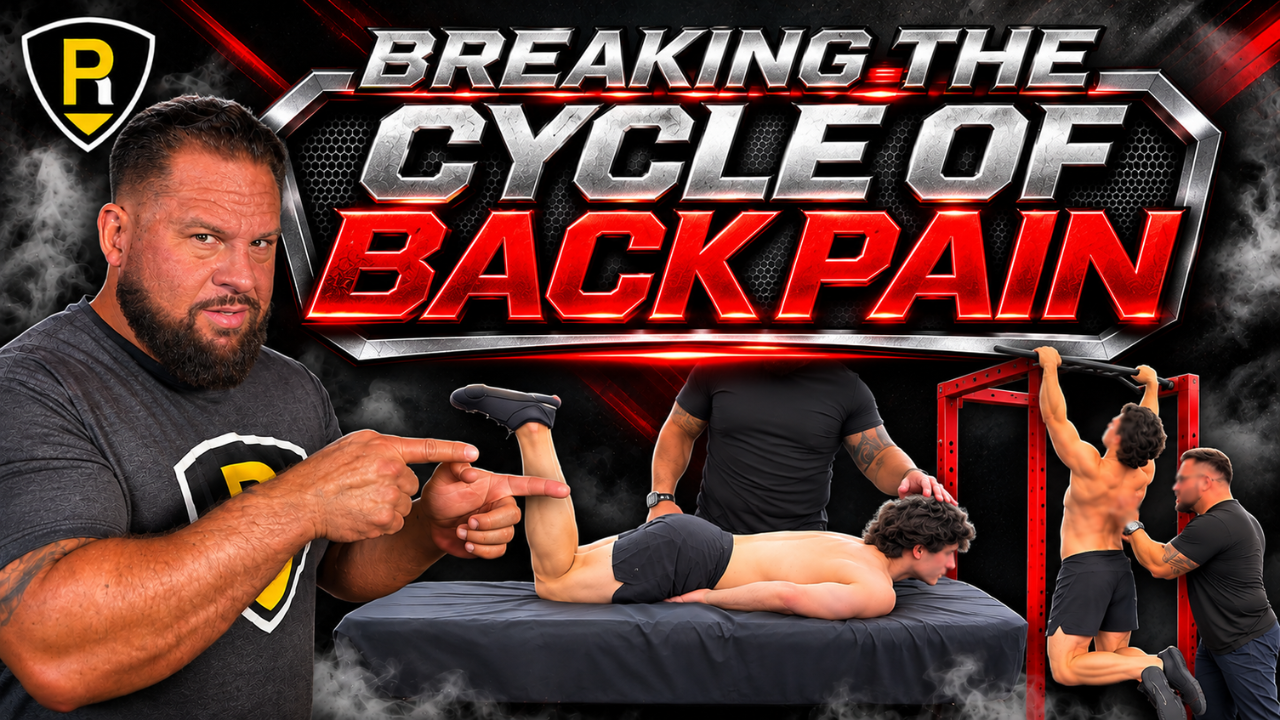
19 Nov Breaking the Cycle of Back Pain: Josh Paulson’s Journey From Fear to Confidence
Article Rundown
- Chronic back problems can affect confidence, relationships, and mental health, even when pain isn’t severe.
- A thorough assessment helps identify tolerable movements and establish a more individualized recovery plan.
- Progressing too aggressively can aggravate symptoms, even when you initially feel stronger.
- Long-term improvement requires consistency, appropriate progression, and a willingness to change old habits.
Breaking the Cycle of Back Pain
Chronic back pain can take away far more than your ability to lift weights, work, or move comfortably. It can change how you see yourself, how you interact with your family, and whether you feel confident doing everyday activities. I’ve seen this firsthand with people who have spent years searching for answers, and Josh Paulson’s story is a powerful example of what can happen when someone finally commits to changing how they approach their recovery.
Josh’s journey wasn’t a straight line. There were setbacks, periods of frustration, and times when he questioned whether he would ever feel normal again. But his experience also demonstrates something I emphasize constantly: getting better requires patience, consistency, and a willingness to stop repeating the habits that contributed to your problems.
When Back Pain Starts Controlling Your Life
By 2024, Josh had reached an incredibly difficult point. He had purchased a home, was living with his wife and three dogs, and appeared to have everything going for him. However, behind the scenes, he was struggling mentally and physically.
Josh had spent much of his life identifying as someone strong, capable, and physically active. After dealing with serious back problems and undergoing surgery during his time in the Army, that identity began slipping away. He became afraid of everyday situations, including driving, traveling, and leaving the house. Interestingly, he wasn’t necessarily experiencing unbearable pain anymore. Much of his struggle came from discomfort, uncertainty, and the fear that something would make his condition worse.
That fear eventually affected his relationships, confidence, and mental health. He described feeling hopeless and becoming someone he barely recognized. What stood out to me was how much his physical limitations had influenced every other part of his life.
Rebuilding Confidence Through a Proper Assessment
In early 2025, Josh decided to reach back out to me. We had worked together previously, but he had moved away from the approach we originally established. He admitted that he was nervous about contacting me again because he expected criticism for not following through. That wasn’t my concern. I was glad he reached out because we had another opportunity to work toward getting him better.
Josh traveled to Jacksonville for an in-person assessment, where we examined his movement, symptoms, tolerances, and physical capabilities. Rather than simply telling him to avoid everything that caused discomfort, we worked to identify what he could safely do and how to build from there.
One of his biggest surprises was discovering how much movement he could perform with little or no discomfort. That experience helped him recognize that his body was capable of more than he had convinced himself it could handle.
Feeling Better Doesn’t Mean You’re Ready for Everything
For the first couple of months, Josh followed the plan closely and made substantial progress. Unfortunately, that improvement created another problem. As he started feeling stronger, he began introducing more demanding exercises and movements before he was ready.
Incline bench pressing, back extensions, and other activities gradually made their way back into his training. We discussed being careful about progressing too quickly, but Josh’s natural tendency was to push harder whenever he felt capable.
By late 2025, symptoms began returning. He wasn’t necessarily experiencing severe back pain, but he noticed increasing tension and uncomfortable sensations in his leg. His confidence declined, and the frustration started affecting his mental health again.
This is something I see frequently. Feeling better is not the same as having rebuilt the capacity to tolerate everything you want to do. Progress requires understanding your limits and gradually expanding them without repeatedly aggravating sensitive tissues.
The Turning Point: Committing to the Process
Around December 2025 or January 2026, Josh contacted me again. This time, he recognized that his biggest obstacle wasn’t necessarily the program. It was his tendency to do too much, too soon.
He returned to Jacksonville with his wife, who wanted to understand the process and help keep him accountable. We went through his assessment and movement strategies again, reinforcing the principles he needed to apply consistently.
The difference this time was his mindset. Instead of constantly testing whether he could return to his previous activities, he committed to managing his movement, respecting his limitations, and making the necessary adjustments part of his everyday life.
That meant recognizing when certain movements, including bending exercises and nerve mobilization techniques, might be premature. The goal wasn’t to avoid movement forever. It was to stop forcing activities that his body wasn’t prepared to tolerate.
Getting Back to Living Without Constant Fear
Over the following six months, Josh reported only one relatively minor flare-up involving his gluteal region. More importantly, his relationship with movement completely changed.
He still occasionally experienced tingling and unusual sensations in his leg, but significant pain was no longer dominating his daily life. He could attend school, sit through classes, drive, walk regularly, and participate in ordinary activities without constantly worrying about how his back would respond.
His mood improved, his confidence returned, and he began feeling like himself again. For someone who previously feared getting out of bed or traveling somewhere unfamiliar, those changes were substantial.
Long-Term Success Requires a Different Mindset
One of Josh’s biggest takeaways was that his recovery required more than performing a few exercises. He had to fundamentally change how he thought about training, spinal stability, and movement.
He began approaching exercises like push-ups with greater awareness of his trunk and how he maintained stability throughout the movement. Rather than treating core control as an afterthought, he recognized its importance in supporting the activities he wanted to perform.
Josh also accepted that he didn’t need to become the exact same person he was before his back problems. His experiences had changed him, but they had also taught him how to train more intelligently.
That’s ultimately what I want people to understand. Recovery isn’t about proving how much you can tolerate on any given day. It’s about building enough consistency, capacity, and confidence that you can get back to living your life without letting fear dictate every decision.
Contact Info and More!
For more on Brian Carroll:
Website: PowerRackStrength.com
Email: Brian@PowerRackStrength.com
Instagram: BrianCarroll1306
Buy Gift of Injury!
Buy Back Mechanic!
Buy Ultimate Back!

Buy Back Mechanic!
PRS Bands and Straps!

Sorry, the comment form is closed at this time.