



22 Apr You’re Bracing WRONG… Here’s Why Your Back Hurts
Article Rundown
- Bracing is a dimmer switch, not all or nothing
- Push out 360°, don’t suck your stomach in
- Too much stiffness = compression, too little = instability
- Match your brace to the demand of the task
Stop Treating Bracing Like a Light Switch
Most people get bracing completely wrong because they think it’s all or nothing. Tight or relaxed. On or off. That’s not how the body works, and it’s not how the spine is designed to function. Bracing is not a light switch. It’s a dimmer switch.
When I work with athletes, lifters, and people dealing with back pain, one of the first things I teach is how to “turn the dial.” You don’t need maximum stiffness for everything you do, and you don’t want zero stiffness either. The goal is tuned stiffness. The right amount, at the right time, for the right task.
What Proper Bracing Actually Looks Like
Before we even talk about intensity, you need to understand the foundation. It starts with what I call the anti-shrug. Most people live with their shoulders elevated, disconnected from their lats. When you shrug, you lose one of your biggest stabilizers.
Instead, pull your shoulders down. Engage your lats like you’re trying to tuck them into your back pockets. At the same time, your pecs come down with them. Now your torso is anchored as one unit.
From there, you build pressure the right way. Not by sucking in your stomach. That cue needs to go away. You want the opposite. You want to push out laterally through your obliques. Think 360-degree expansion. Your core is not just your abs in the front. It’s your entire torso working together to stabilize your spine.
The Biggest Mistake: Over-Bracing Everything
Here’s where most high performers mess this up. They learn how to brace, and then they crank it to a ten out of ten for everything they do. Walking? Ten out of ten. Picking something up? Ten out of ten. Light weights? Ten out of ten. That’s a problem.
When you over-brace, you increase compressive forces on the spine. You fatigue your musculature. You create unnecessary rigidity. Over time, that leads to irritation, not resilience. On the flip side, if you don’t brace at all, you end up with instability. That’s where injuries sneak in. Too loose, you get instability. Too tight, you create compression overload. The answer is not more. The answer is precision.
Turn the Dimmer Switch
This is where the real skill comes in. You have to match your stiffness to the demands of the task. If you’re just standing, walking, or doing light daily activity, you only need a small amount of stiffness. Just enough to keep your torso unified and controlled. If you’re getting out of a chair or picking something up, you dial it up a bit. Now you’re bracing more deliberately, creating pressure before you move, and maintaining that stiffness through the movement.
When you’re lifting heavy, that’s when you approach maximal stiffness. That’s when you lock in, create high intra-abdominal pressure, and move as one unit. But even then, it’s not panic-bracing. It’s controlled, deliberate, and built up as the load increases.
Stability Creates Performance
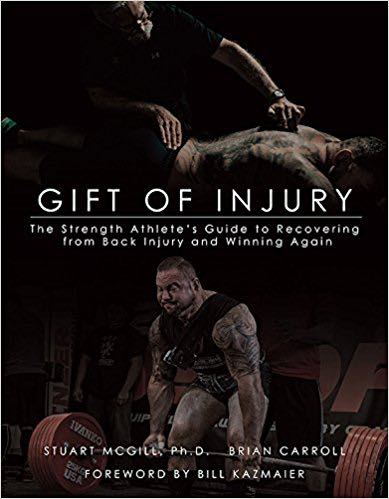
One of the biggest principles I’ve learned, and one that’s backed heavily by Dr. Stuart McGill’s work, is that stiffness protects the spine under load. But more importantly, it allows performance. Proximal stiffness creates distal athleticism.
If your trunk is stable, your hips and shoulders can produce force more efficiently. That’s how you lift more weight. That’s how you move better. That’s how you stay healthy. Again, it’s not about being stiff all the time. It’s about being stiff when it matters.
The Takeaway
Bracing is not about being rigid 24/7. It’s about applying the least effective dose of stiffness needed for the task in front of you. You anchor with the anti-shrug. You create 360-degree pressure by pushing out, not sucking in. Most importantly, you learn how to turn the dial.
The people who build resilient backs and long-lasting strength aren’t the ones who go all in or do nothing. They’re the ones who learn how to live in the middle. Tuned, controlled, and precise. That’s how you protect your spine. That’s how you perform.


Sorry, the comment form is closed at this time.