



15 Oct Back Extensions Won’t Fix Every Back: Why Individual Assessment Matters
Watch the full video on Rumble!
Article Rundown
- Back Pain Is Individual: Understanding the root cause of pain is essential before prescribing exercises or treatment.
- Back Extensions Aren’t for Everyone: Loaded spinal flexion and extension can aggravate certain injuries, especially in individuals with disc degeneration.
- Build Capacity Strategically: Strengthening the spine requires appropriate exercises, controlled progression, and respect for individual limitations.
- Assessment Comes First: Identifying pain triggers, movement tolerance, and injury history is the foundation for long-term recovery and resilience.
Back Extensions Won’t Fix Every Back
What if the exercise you’re doing to fix your back pain is actually making your problem worse?
That’s a question more people need to consider before following another exercise trend online. Whether we’re talking about McKenzie press-ups, loaded back extensions, or Jefferson curls, the problem isn’t necessarily the exercise itself. The problem is prescribing movements without understanding the individual, their injury, and what their spine can tolerate.
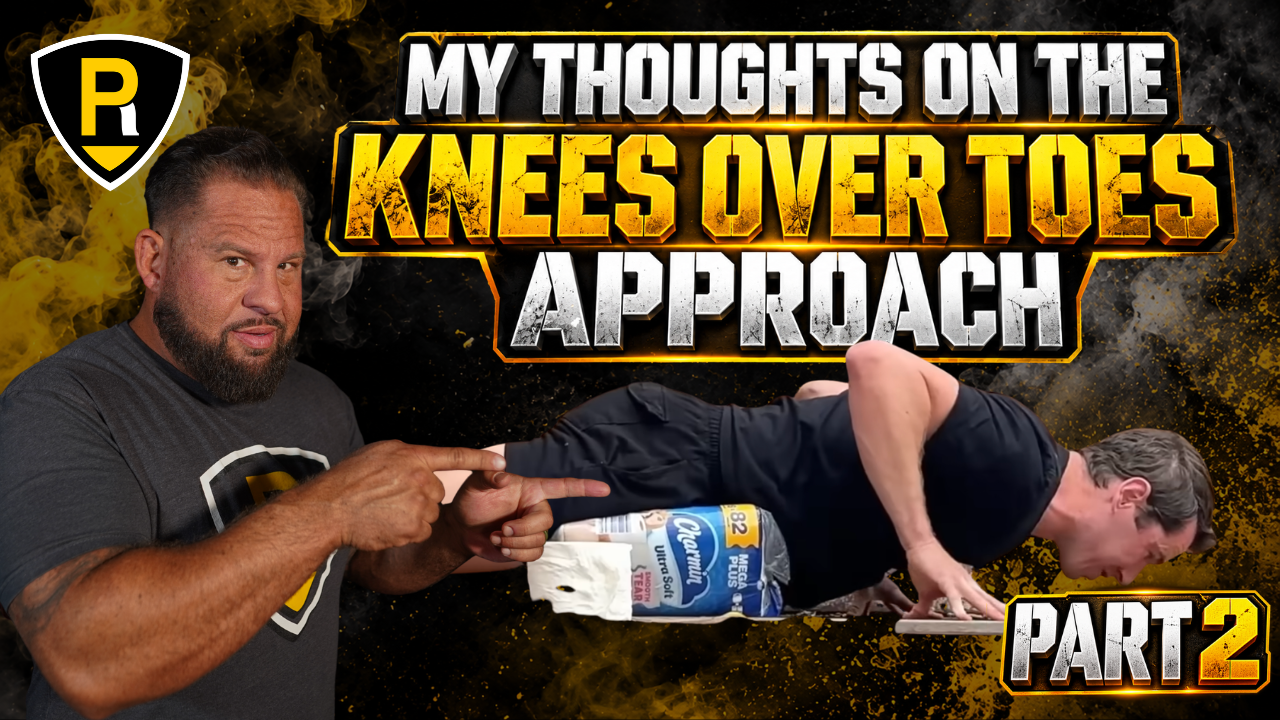
In this second part of my commentary on the Knees Over Toes Guy’s approach to back training, I want to explain why building spinal capacity requires much more than simply strengthening your lower back.
Understanding Spinal Capacity and Disc Height
One of the most common ways people injure their backs is by exceeding their current capacity and tolerance. Compression combined with spinal flexion can contribute to certain injuries, but that doesn’t mean avoiding flexion or performing extension exercises is the universal answer.
Consider someone who has already lost significant lumbar disc height. The discs between our vertebrae provide spacing and help distribute loads throughout the spine. As disc height decreases, the posterior elements of the spine, including the facet joints, can experience increased loading during extension. For someone with degenerative changes, repeatedly forcing that position may aggravate symptoms.
Compare that individual with someone who has healthy disc height, adequate mobility, and no sensitivity to extension. Their tolerance may be entirely different. This is why I disagree with the idea that McKenzie press-ups or back extensions should be prescribed broadly without first identifying what produces and relieves someone’s pain.
Lower Back Pain Is Not a Diagnosis
When somebody tells me they have lower back pain, my first question is simple: What’s causing it?
Think about somebody complaining of stomach pain. Would you prescribe the same treatment without knowing whether the problem involved their digestive system, an infection, or something entirely different? Of course not. Yet we frequently see generalized recommendations for back pain without identifying the underlying problem.
Is the pain discogenic, meaning it originates from an intervertebral disc? Is it associated with the facet joints, a compression injury, or a particular movement pattern? Was there a traumatic event? These questions matter. A proper assessment should examine injury history, symptom behavior, movement tolerance, and relevant imaging when indicated. An MRI alone doesn’t tell the whole story, but correlating clinical findings with imaging can help clarify certain conditions.
The McGill Big Three and the Importance of Specificity
I have similar concerns when people recommend the McGill Big Three as a universal solution. The curl-up, side plank, and bird dog, developed and popularized through Dr. Stuart McGill’s work, are designed to build trunk stability and endurance while limiting unnecessary spinal motion.
I generally find that appropriate variations of these exercises are tolerable for many of the people I assess. However, that doesn’t mean everybody should immediately begin performing them without understanding their condition.
The difference with loaded back extensions is that they can introduce considerable forces through the lumbar spine, particularly when combined with end-range flexion or extension. Neither approach should replace the assessment process.
Your Entire Body Influences Your Back
Another important point raised in the video is the relationship between life’s physical demands and our ability to handle them. I agree that we need to build capacity, but capacity must be specific to the individual.
Consider somebody recovering from an ankle sprain. If their ankle no longer moves properly, their squat, landing mechanics, and overall movement strategy may change. Those compensations can influence how loads are distributed through the hips and lower back.
Everything is connected, but identifying those relationships requires more than assuming every painful back needs additional strength or flexibility.
Why Loaded Back Extensions Concern Me
The video demonstrates back-extension variations using sandbags, including approximately 100 pounds of additional resistance while moving through substantial spinal flexion and extension.
I recognize that the individual performing these exercises appears comfortable and capable. Some people have tremendous spinal resilience and can tolerate demanding movements for years without apparent problems.
However, demonstrating an impressive exercise doesn’t establish that it’s appropriate for somebody else’s spine. A person with significant disc degeneration, extension sensitivity, or a previous lumbar injury may respond very differently to the same loading strategy.
I have similar concerns about recommending back-extension machines for older adults without first understanding their injury histories. Two people can have similar complaints but entirely different anatomical limitations and mechanical sensitivities. Their programs shouldn’t automatically look identical.
When Exercise Trends Become a Problem
In my clinical work, I’ve encountered people who report worsening symptoms after attempting popular exercises, including Jefferson curls and loaded back extensions. That doesn’t prove these exercises are inherently dangerous. It demonstrates why individual responses matter.
I recently evaluated a 72-year-old man who first injured his back at 27. For approximately 45 years, he experienced recurring pain while trying different approaches that provided temporary relief. Eventually, his symptoms included pain radiating down both legs toward his feet.
That’s the cycle I want people to avoid. Temporary symptom relief isn’t necessarily the same thing as identifying and addressing the factors contributing to recurring pain.
Assess First, Then Build Capacity
My own recovery from a devastating back injury reinforced this philosophy. Working with Dr. Stuart McGill, we identified my specific pain triggers, removed aggravating demands, and gradually rebuilt my capacity through targeted exercises and appropriate progression.
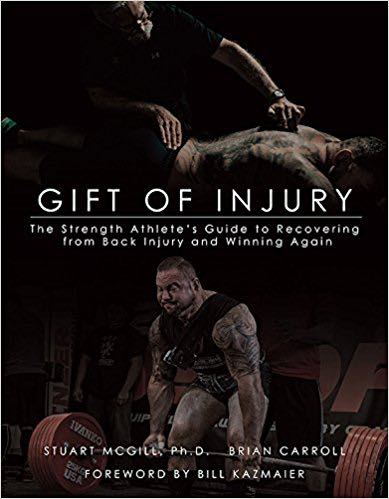
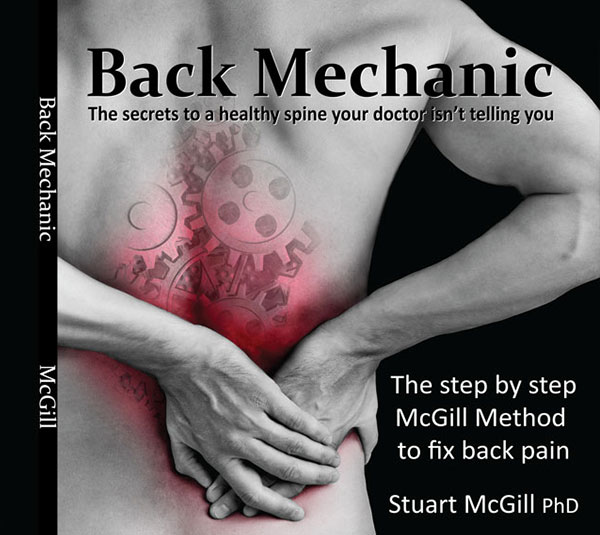
That experience became a central part of Gift of Injury, the book Dr. McGill and I wrote together. His book Back Mechanic also offers valuable education on understanding back pain and identifying movements that may aggravate symptoms.
I’m not against building stronger backs. I’m against telling everyone to build them the same way.
Before loading your spine with another exercise you saw online, understand your injury, your tolerance, and your goals. The best exercise isn’t necessarily the most impressive one. It’s the one that helps you progress without continually aggravating the problem.
Get In Touch With Brian Carroll!
Brian Carroll Contact Info:
Website: PowerRackStrength.com
Email: Brian@PowerRackStrength.com
Instagram: BrianCarroll1306
Buy Gift of Injury!
Buy Back Mechanic!
Buy Ultimate Back!
Buy Back Mechanic!
PRS Bands and Straps!

Sorry, the comment form is closed at this time.