



23 Sep I Tore Up Both Shoulders in a Matter of Months. Here’s How I Got Back to Training
Article Rundown
- Tore up both shoulders within a few months but returned to training quickly.
- Used shoulder stabilization, thoracic mobility, and rowing to rebuild function.
- Peptides and microcurrent were part of the recovery process.
- Biggest lesson: fix the mechanical cause before relying on recovery tools.
Here’s How I Got Back to Training
I managed to give myself one heck of a 45th birthday present. While doing aggressive snap-downs and trying to break a set of suspension training straps, I tore into my right shoulder badly enough that the bruising eventually traveled from my shoulder down toward my hip.
The funny part is that I had already injured the other shoulder just a couple of months earlier.
Over a short period of time, I tore up both shoulders badly enough that pressing, grappling, and upper-body training could have been put on hold for quite a while. Instead, I was able to get back to pressing, rowing, carrying, and grappling relatively quickly. There was some luck involved, but there were also several things I did deliberately to create a better environment for recovery.
The First Injury
The first one happened in May while I was doing jiu-jitsu with my friend Daniel Holmes from Versus Training Center here in Jacksonville. Daniel has more than 30 years of wrestling experience and is a very good coach. I, on the other hand, had basically not grappled seriously since high school.
At one point Daniel was on top of me and, instead of using good technique, I tried to muscle him off from my back. That irritated and tore into the left lat and subscapularis area. The subscapularis is one of the four muscles of the rotator cuff and plays an important role in stabilizing the shoulder and internally rotating the arm.
It hurt, but I still had good function. My goal became figuring out how to keep moving without continually aggravating the injury.
Then I Did It Again
A couple of months later, on my birthday, I decided I wanted to train hard. Sometimes I do dumb things, and I certainly do not recommend copying everything I do.
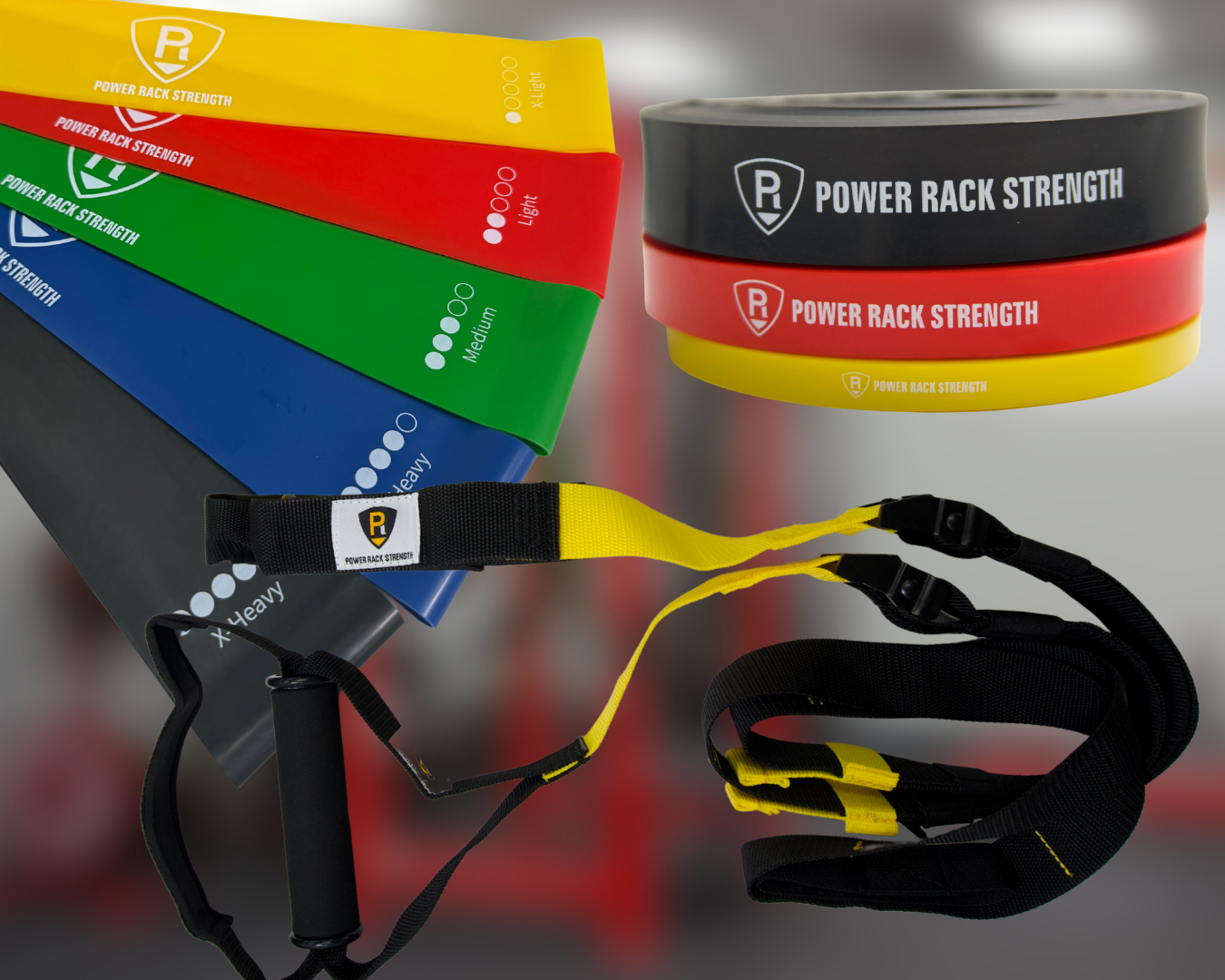
I was doing snap-downs with our suspension straps and basically trying to prove I couldn’t break them. The straps won. My right shoulder did not.
This injury was worse than the left. There was significant bruising that traveled down my side, and it hurt badly. Still, I had enough function that I felt comfortable beginning a conservative return to movement rather than completely shutting everything down.
Dr. Stuart McGill once told me an old story that comes back to the phrase, “Could be good, could be bad.” Something can look terrible in the moment, but you do not always know where it is going to lead.
He told me that years ago when he asked me to fill in and teach a course in Buffalo. My reaction was basically, “No s***, it could be bad.” I was filling in for everybody’s favorite teacher. But I went, stretched myself outside my comfort zone, and it ended up being a great experience.
These shoulder injuries were obviously not good, but they forced me to look closely at what I was doing for recovery and why some approaches seemed to work better than others.
Change the Environment First
The most important thing I did was stop continuously irritating the injured tissue.
I did not completely stop training, and I even continued some grappling, but I backed away from movements that clearly aggravated the shoulder. There is a big difference between staying active and repeatedly hammering the exact movement that caused the injury.
You have to change the biomechanical environment.
For me, that meant relative rest, shoulder stabilization, thoracic mobility, and gradually rebuilding movements that felt good. If you keep recreating the irritation every time you train, I do not think any recovery modality is going to save you.
I used the Lock Shoulder Big Three, band work, and other basic stabilization exercises. Nothing fancy, just controlled work that allowed me to strengthen the area around the shoulder without constantly challenging the injured tissue.
Why Rowing Became So Important
I also did a lot of rowing, and I think rowing is criminally underrated for shoulder health.
Cable rows are useful, but I particularly like suspension rows because I can choose my own pulling angle. I can pull a little lower, a little higher, change my body position, and find a path that feels natural to my shoulder instead of being completely locked into a machine.
That was especially useful while I was rehabbing. I could gradually load the upper body while still letting the shoulder dictate what positions felt good.
Between the stabilization work, thoracic mobility, rows, and sensible loading, rehabilitation started turning back into training pretty quickly. Eventually I was carrying, bench pressing, doing push-ups, and grappling again.
Peptides and My Recovery Protocol
Peptides were also part of what I did.
I have experimented with peptides on and off for many years, and recently I have spent a lot more time learning about them. During these shoulder injuries, compounds including BPC-157 and TB-related peptides were part of my personal protocol. I have also experimented with other compounds such as SS-31, also known as elamipretide, which is associated with mitochondrial function and cellular energy.
I am not saying one compound magically healed my shoulder. I was changing my training, giving the tissue time to settle down, improving stability, rowing, restoring movement, and gradually rebuilding capacity at the same time.
That distinction is important. I do not believe you can ignore the mechanical problem and expect peptides to fix everything for you. You need to create an environment where healing can actually take place.
Microcurrent and Dr. Joe Camisa
Another tool I have incorporated is microcurrent therapy, especially through my work with Dr. Joe Camisa.
Joe has helped me tremendously with other problems, particularly the hamstring and adductor issues I have discussed before. By the time I went back to see him, my shoulders were doing well enough that they were not even the main priority.
Microcurrent uses very low-level electrical currents as a therapeutic modality. With frequency-specific microcurrent, different frequencies can be selected based on the tissue or problem being addressed. I have used it around my legs and shoulders and in situations involving soft tissue, swelling, and nerve irritation.
I have responded very well to it, and working with Joe has changed the way I look at how these recovery tools can fit alongside intelligent training and rehabilitation.
Back to Training
Within a couple of weeks, I was already working my way back into meaningful upper-body training. I could row, carry, press, grapple, and eventually do push-ups without a problem.
That does not mean my shoulders suddenly became brand new. I have beaten myself up for a long time and injured both shoulders more than once. They still get achy occasionally, and there will probably always be some maintenance involved.
When they start bothering me, I go back to the basics: thoracic mobility, shoulder stabilization, rowing, appropriate loading, and letting irritated tissue calm down instead of trying to prove something every day.
By September, the left shoulder I injured in May was feeling great, and the right shoulder I damaged at the end of July had no meaningful swelling, bruising, or limitation. I could press, wrestle, grapple, carry, and most importantly, play with my girls without worrying about my shoulders.
The Biggest Lesson
The biggest takeaway from all of this is that recovery tools cannot fix a bad environment.
I am interested in peptides. I am interested in microcurrent. I am interested in anything that can potentially help me recover and continue doing the things I love.
But none of those things replace good training decisions.
If a movement is continuously irritating you, change it. Improve the mechanics around the area. Build stability. Restore the mobility you actually need. Find movements you can train without continually making the problem worse, then progressively work your way back toward normal training.
I got a little lucky with both shoulders, but I also respected the injuries enough to change what I was doing while continuing to move forward.
And if you are thinking about testing whether our suspension straps are actually breakable, take my advice and don’t.
You might find out your shoulder breaks first.
Buy Gift of Injury!
Buy Back Mechanic!
Buy Ultimate Back!
Buy 10/20/Life!

PRS Straps and Bands!
Lumbar Back Supports!


Sorry, the comment form is closed at this time.