



03 Oct From a Broken Back to World-Class Strength: How I Rebuilt My Body (with Dr. Joe Camisa)
Watch the full video on Rumble!
Article Rundown
- Eliminating harmful habits was the first step toward recovery.
- Core stability, glute strengthening, and walking rebuilt my foundation.
- Slow loading progressions and regular deloads helped me return to heavy lifting.
- Maintaining foundational exercises is essential for long-term resilience and performance.
How I Rebuilt My Body (with Dr. Joe Camisa)
When people hear that I recovered from a devastating back injury and returned to world-class powerlifting, they often assume there was some secret treatment or shortcut involved. The truth is much simpler. My recovery came down to eliminating harmful habits, rebuilding my foundation, and having the discipline to progress slowly. During a recent conversation with Dr. Joe Camisa, we discussed my early recovery with Dr. Stuart McGill, how I eventually returned to lifting, and how those lessons influence the way I work with injured athletes today.
Starting Over With Dr. Stuart McGill
When I visited Dr. McGill in May 2013, I already had world-record squats of 1,030 pounds at 220 pounds and 1,185 pounds at 275 pounds. Unfortunately, my back was deteriorating, and I had developed terrible habits trying to manage my pain.
I was constantly stretching, foam rolling, testing my symptoms, and moving in ways that aggravated my injury. When I finally met McGill, I decided to approach recovery as a complete beginner. Regardless of what I thought I knew about lifting, I was going to listen. Through the assessment, I learned how to move without unnecessarily aggravating my spine. Techniques such as the golfer’s pickup, shortstop squat, and lunge helped me perform everyday activities more comfortably. Once I stopped repeatedly provoking my symptoms, my pain began improving rapidly.
Rebuilding My Foundation
My initial rehabilitation wasn’t complicated. I incorporated the McGill Big Three, consisting of the modified curl-up, side plank, and bird dog. These exercises helped me develop core stability and endurance without repeatedly moving my spine through painful positions. I also addressed my deconditioned glutes through bridges, single-leg stands, and unloaded hinge movements. From there, I increased my walking and gradually introduced exercises such as rolling planks, stir-the-pot progressions, and dead bugs.
Within a couple of months, my daily pain had improved tremendously. I still experienced occasional flare-ups from yard work or prolonged standing, but I had learned how to manage them through walking, position changes, and better movement habits. The biggest breakthrough wasn’t discovering some revolutionary exercise. It was recognizing that I had been repeatedly irritating my injury and finally eliminating those behaviors.
Earning the Right to Lift Again
Once my symptoms were under control, McGill gradually introduced push-ups, pull-ups, and goblet squats using no more than a 40-pound kettlebell once per week. Eventually, we added suitcase carries, sled drags, and elevated deadlifts.
Each movement was introduced individually, allowing me to establish tolerance before progressing. Sometimes I increased the weight by only 5 or 10 pounds. My progressions were extremely conservative, often around 2% to 5%, depending on the exercise. I didn’t return to pulling directly from the floor until approximately ten months into recovery. I also incorporated regular deloads, removing significant spinal loading approximately every three weeks while maintaining my walking and appropriate core exercises.
My primary loading day was Wednesday, giving me an entire week between substantial loading sessions. As the weights increased, I monitored how my body responded. I wasn’t interested in forcing progress if my symptoms suggested I wasn’t ready. People still ask whether I had surgery or used some special intervention. I didn’t. I maintained my prescribed medical treatment and concentrated on following the process without introducing unnecessary variables.
Never Abandon What Got You Better
Dr. Camisa brought up an excellent analogy about driving across the country at night. You cannot see your destination, but your headlights illuminate the next stretch of road. Keep moving through those manageable distances, and eventually you get there.
That’s how I approached rebuilding my strength. The process was repetitive, sometimes boring, and required tremendous discipline. One of the biggest mistakes I see today is people abandoning their foundational exercises once they return to their sport. They stop walking, performing core exercises, and practicing good movement habits because they assume they’re completely recovered.
I never abandoned those principles. Even after returning to heavy lifting, glute bridges, bird dogs, walking, and stability exercises remained part of my routine. I even incorporated certain movements between sets to help manage symptoms and maintain my ability to train. Recovery doesn’t necessarily end when you return to your sport. Those foundational habits can become part of your long-term training.
Rebuilding Running and Loading Tolerance
Dr. Camisa also asked how I approach athletes who need to regain both spinal loading tolerance and the ability to run. With military personnel, including Rangers and Green Berets, I generally prioritize rebuilding their ability to carry loads before introducing significant running demands. That might begin with light suitcase carries, back extension holds, and gradually increasing the weight carried in a rucksack.
Once someone can tolerate carrying equipment and walking longer distances, we may introduce walk-jog intervals. An initial session might involve four minutes and thirty seconds of brisk walking followed by thirty seconds of jogging. As their tolerance improves, the running intervals gradually increase. The timing depends on the individual, their injury, and their recovery. Some respond better when running and loading occur closer together, while others need those activities separated.
I’ve also worked with endurance athletes returning from significant disc injuries. Beyond rebuilding spinal tolerance, these individuals may need improved hip mechanics, upper-body conditioning, and strategies such as using trekking poles to distribute effort across the body. The objective is to progressively develop the physical qualities required for their activity without repeatedly exceeding their current capacity.
Train for the Demands, Not Just the Test
Another mistake I see with military and competitive athletes is repeatedly performing the exact physical test they’re preparing for. Instead of constantly exhausting themselves with maximum sit-up tests, heavy deadlifts, and demanding assessments, we build the underlying qualities through appropriately selected exercises.
This includes anti-flexion and anti-rotation training, planks, back extension holds, and progressive conditioning. Anti-rotation exercises strengthen the trunk’s ability to resist twisting forces while the limbs produce movement.
Dr. McGill’s research investigating spinal loading and injury mechanisms helped shape this approach. His work emphasizes understanding how tissues respond to different demands rather than simply loading them without consideration. We also discussed prolonged sitting. Sitting alone shouldn’t automatically be equated with structural spinal injury, but extended periods in a flexed position can temporarily influence tissue stiffness and loading tolerance. Immediately transitioning into heavy lifting without preparation may present additional challenges, particularly for someone with an existing injury.
The Difference Between Talent and Mastery
Our conversation eventually shifted toward combat sports, particularly Georges St-Pierre and B.J. Penn. St-Pierre’s work with Dr. McGill illustrates how trunk stability and efficient movement can contribute to athletic performance. Penn was also an extraordinary talent, achieving remarkable success in Brazilian jiu-jitsu early in his career.
Their careers brought us to an important discussion about natural ability, preparation, and longevity. To me, exceptional athletic performance involves more than genetics. Work ethic and the ability to understand and refine your craft matter tremendously. Having all three creates an extraordinary combination.
The same principle applies to recovering from injury. Strength alone wasn’t enough to get me back under the bar. I had to learn, adapt, and develop the discipline to consistently do what my body needed. The greatest lesson from my recovery is that progress doesn’t always require doing more. Sometimes it begins with eliminating what’s holding you back, establishing a foundation, and patiently earning the capacity to do more.
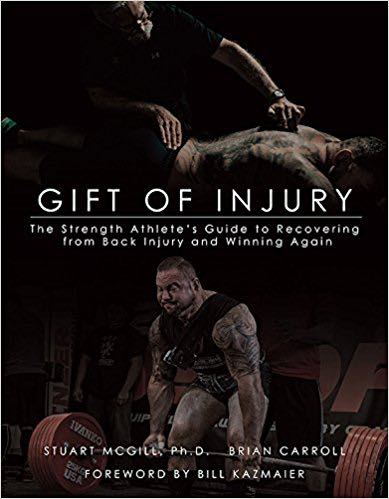
Buy Gift of Injury!
Buy Back Mechanic!
Buy Ultimate Back!
Buy Back Mechanic!
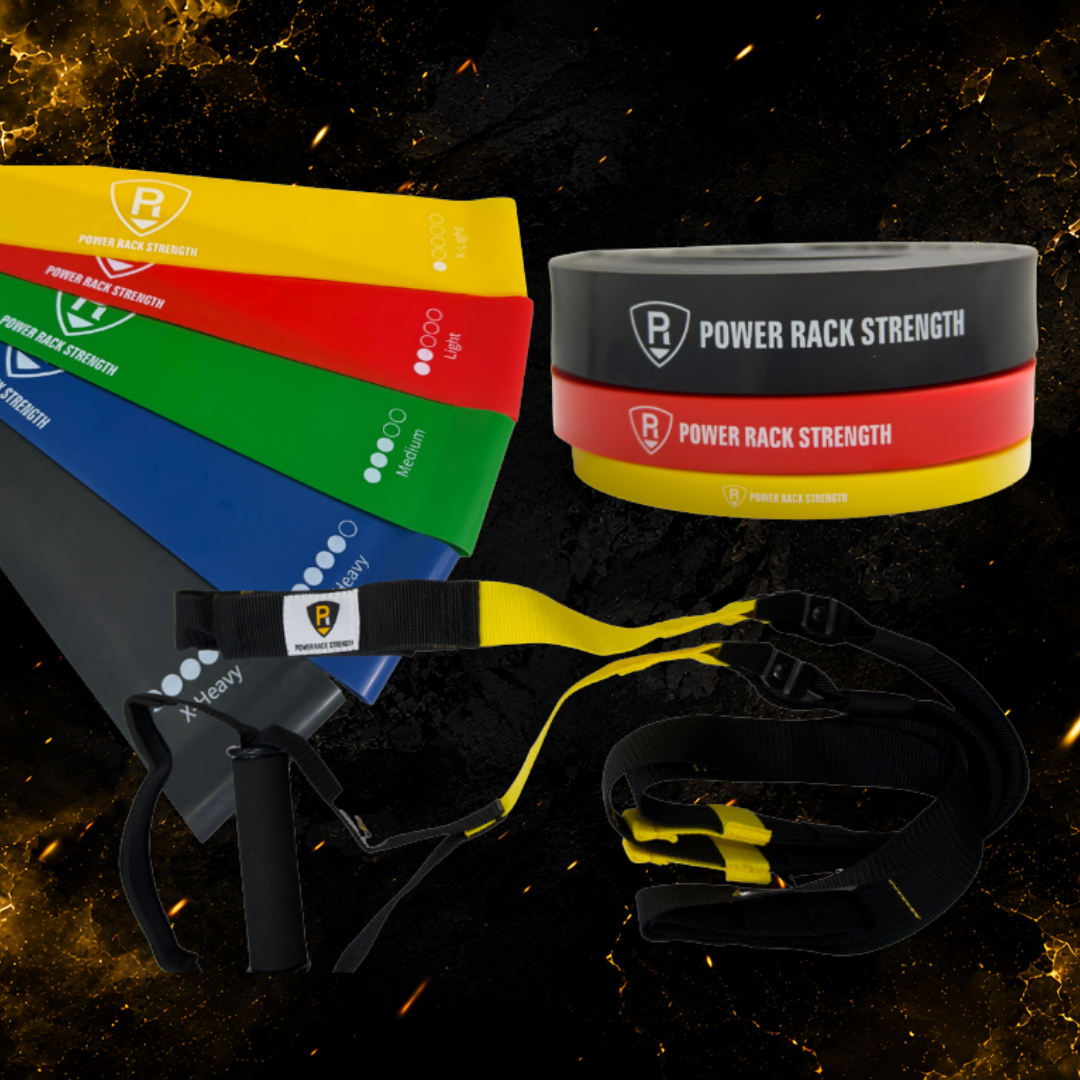
PRS Bands and Straps!

Sorry, the comment form is closed at this time.